Category: Blog

  • Lightshed

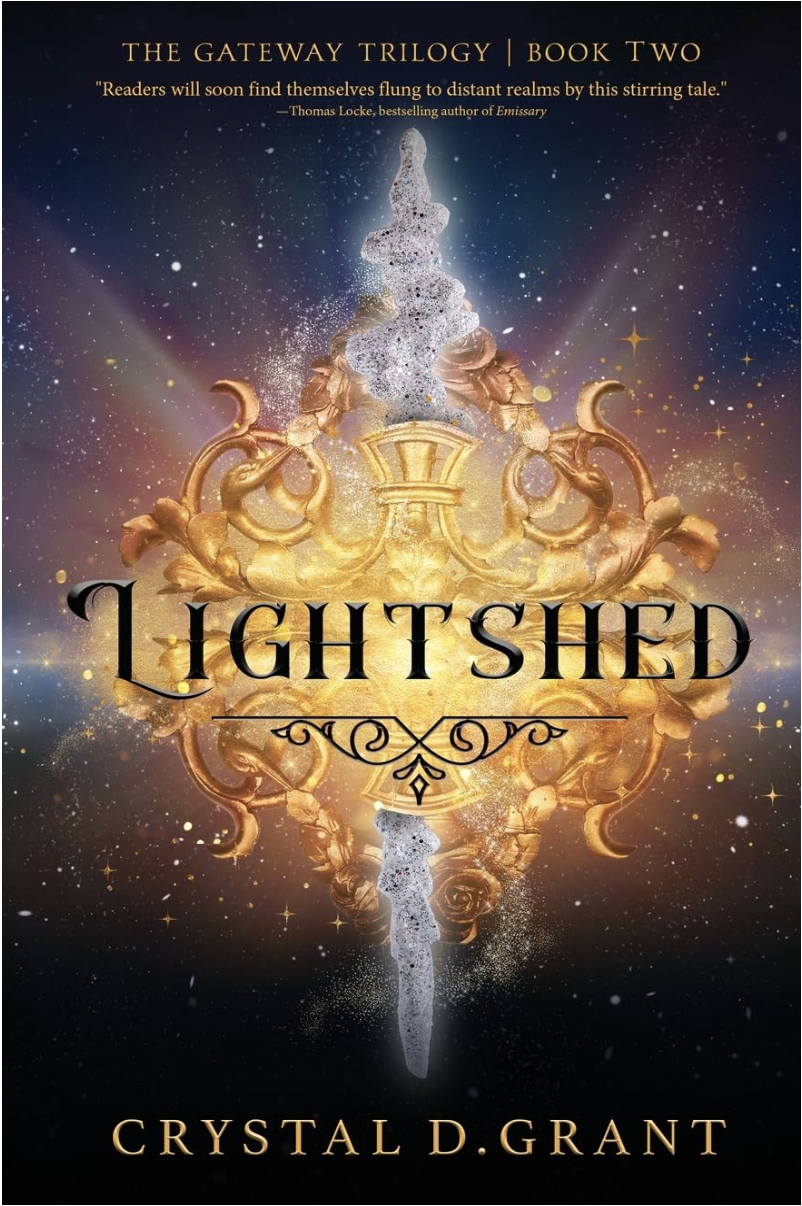
    Lightshed

    By Crystal Grant

    Reviewed by Jubilee Anderson

    GENRE: Christian Fantasy Romance

    RATING: ⭐⭐⭐⭐

    The coveted Shadowstone is finally his. But what will it cost him?

    Empowered by his new role as Shadowman, Mason Grey has strengthened his resolve against the Steward Army and the prince he has sworn to kill. But his heart is torn between justice for his brother and desire for the girl who stands with his enemy. Determined to bridge the gap, he risks everything he’s worked for to try to win her over to his side.

    Convinced there is still good in him, Seria Gayle makes up her mind to point Mason to the truth, even if it means betraying the Stewards she has befriended. When the dark Emperor Jader turns his sights on the Gateway between his realm and theirs, Seria makes a bold decision that takes her far from home and into enemy territory. But standing between light and darkness comes with a price, and she fears the cost for Mason’s salvation may be too high to pay.

    As tensions heat up on both sides of the Gateway, Mason is given a challenging assignment that will strengthen his master’s army for years to come-but it could mean losing Seria forever. To make matters worse, his abilities as a Reader begin spiraling out of control. Will this mission of vengeance bring him the closure he needs…or destroy him from the inside out?

    Writing

    I said much in my review of Shadowcast that also applies to Lightshed, though my thoughts are milder in Lightshed.

    The beginning of Lightshed was an improvement from Shadowcast. In Shadowcast, the beginning was slow and it was difficult to connect to the main character. Since we already knew the characters in Lightshed, the story started faster and better.

    That said, like many middle-of-the-trilogy books, Lightshed doesn’t stand out to me as much as the first book. Grant pulled off few plot twists, but a lot of the story was predictable. Regardless, a huge amount of character growth takes place in the book which is essential to the movement of plot. Seria went from a girl who searched for connection and stability in Mason to looking to Lambient. And Mason? Well, I won’t spoil the story.

    The ending was beautiful. It was the right thing, but also the worst thing to happen. The author found a way to make it somewhat hopeful and satisfying. If you’re going to stop somewhere in the trilogy, I’d stop at the second book.

    Worldview

    As before, many things I say here have already been said in full in my last review. I resonated with the themes of redemption, forgiveness, and good-versus-evil.

    Similarly to Shadowcast, I would have liked to feel more of a “No, don’t do that!” gut sensation towards Seria at the beginning. There is a lot of kissing in the first scenes, and they could have been improved if the author had guided our emotions better. Overall, the theme was better handled.

    Warnings

    • Violence: A man is stabbed. A boy is shot. Children are taken by force from their parents. 
    • Sexual Content: There is a lot of kissing during the beginning scenes. After the first quarter of the book it gets better.

    Well, I suppose I don’t have a whole lot to say about Lightshed except that the theme was better guided than Shadowcast. I would have liked to see more exceptional elements, but for her second book, Grant did a great job. I look forward to reading Darkened, the third book in the Gateway Trilogy!

    PAPERBACK PRICE: $19

    YEAR PUBLISHED: 2024

    Amazon Link

  • The Secular-Christian Romance

    The Secular-Christian Romance

    The Secular-Christian Romance

    Once upon a time there was a maid named Sally. Sally lived a (mostly) happy life dreaming of her future prince that she hoped to one day marry. Every day as Sally patched her garments, she longed to find someone who truly cared about her. But it was vain hope. She was too poor.

    A few miles away in a castle lived a wealthy prince. Joe’s problem wasn’t loneliness. Young maidens flocked to him, daring him to love them. But none of them seemed to be the right match for him.

    Until he met Sally. At first it was just a feeling, but once Joe drew up the courage to tell her he loved her, they began to meet regularly. Every time they met, Joe was more reassured that he’d found the right girl. She was, after all, the most beautiful girl on the block. And for the first time in her life, Sally didn’t feel lonely. She knew she had true connection in Joe.

    Of course, they put up boundaries. They took extra measures to be sure that they followed in the path of a clean romance. Sally knew Joe was her husband-to-be. It was a perfect match…

    The Rise of the Secular-Christian Romance

    Have you ever read a book like the story of Joe and Sally? A story where a boy and a girl both have a hole in their heart, and when they get together, that hole is filled?

    This kind of story bugs me. Why? After all, the story of Joe and Sally is a very clean story. It was even written by a Christian author–me. There’s nothing technically wrong with this story. But there’s something deeper that I question about the Christian market.

    Writers are putting secular romances in Christian books. And Christian readers are tolerating these secular-Christian romances, often without realizing it. Because masked under a “clean” romance in the Christian fiction aisle is an over recurring theme that is present in almost every secular romance. It’s this: Human ‘love’ (usually from a love-interest) solves all your problems.

    Why did I put ‘love’ in quotes? The root of the problem of secular-Christian romance is the author’s definition of love.

    In this article, I’m going to dive into the Biblical definition of love. After that, I’ll explain the cultural definition of love and why using the word “clean” to describe fiction is not what Christians should be looking for. Last, I’ll recommend two books for you to add to your TBR list. Because I mostly read fantasy and romantasy, I’ll be drawing from books in these genres as well as the Bible.

    What is Biblical Love?

    Let’s begin with what the Bible has to say about love. To know what true love means, we first must look at Jesus. As John says in 1 John 4:

    Anyone who does not love does not know God, because God is love….In this is love, not that we have loved God but that he loved us and sent his Son to be the propitiation for our sins.

    God loved us enough to send his Son to trade places with us. He took on our sin and punishment. He suffered the worst physical death and the worst spiritual torment. John says elsewhere:

    Greater love has no one than this, that someone lay down his life for his friends.

    My dad, who stole this from someone famous, likes to define true love as this: “Self-sacrifice for the good of another.”

    Just like Jesus sacrificed for mankind’s good to the point of death, we ought to follow in his footsteps. John continues in 1 John 4:

    Beloved, if God so loved us, we also ought to love one another.

    We may not die for someone else. But we still ought to sacrifice. We do the dishes for Mom. Even when we don’t feel like it, we play with our younger siblings. We confront a friend about a sin, risking the loss of a friendship. And we do it willingly, as unto the Lord, without expecting to be repaid.

    The Secular Romance

    Culture defines love as a feeling. An emotional stir when you see someone you like. Joe’s feeling of fulfillment when he met with Sally. Sally’s feeling of connection with Joe. I’m not saying Joe’s fulfillment and Sally’s connection are necessarily wrong, but they’re not necessarily love.

    The word ‘love’ barely means anything anymore. I love chocolate. I love my family. What’s the difference between my love of chocolate and my love towards my family?

    The problem with the secular theme “human ‘love’ solves all your problems” is that it’s a lie.

    Human love does not solve all your problems. Human love fails. Crushes don’t last. Your feelings for the guy or girl you think is a perfect match for you now will fade, and even if they don’t and you get married and live a happy life for decades, one of you will die eventually.

    But God’s love never fails. It is neverending. And the sacrificial love for the good of a fellow human that spreads from God’s love is everlasting too.

    Stop Equating “Clean” with “God-honoring”

    Joe and Sally sure had a clean romance. But did they have a God-honoring romance?

    Christians should stop judging books by whether they’re “clean” or not, and start judging them by whether they’re “God-honoring” or not. What’s the difference?

    “Clean” means there’s no explicit content, no fade-to-black, and maybe even no kissing, depending on what the reader is comfortable with. On the other hand, a person in a God-honoring romance is willing to self-sacrifice for the good of the other person.

    How do we test a book to see if it matches our definition of true love? By asking how the author guides our feelings throughout the book. Let me give an example. In fact, let’s use Joe and Sally.

    Let’s say that Joe kisses Sally. Is Joe kissing Sally because he believes he is sacrificing something of himself that will be good for her? Or is he kissing her for his own feelings of connection, pleasure, and fulfillment?

    If he’s kissing for selfish intentions, is the author having us root for that? Why? Why does the author want us to root for something that’s not true love? Or maybe the author is showing the two characters kiss, but he’s guiding our emotions to desperately want the characters to stop and chose the right thing.

    It is possible that he is truly sacrificing for her good. In the fairytale fantasy Starflower, the main character kisses a girl to bring her back from an enchanted sleep. The author did not direct the main character’s thoughts to himself and his feelings of connection, pleasure, or fulfillment. Instead, she dwelt on the yearning of the main character to resurrect the girl to life again.

    Author-guided emotions are the difference between a kiss scene that is God-honoring or not.

    What To Read Instead?

    Does that mean we should stop reading secular-Christian romance books? Maybe. Maybe not. That’s your own prayerful decision. But you ought to think about the themes of the books you’re reading. Ask yourself: Is this book encouraging me towards Christ, specifically in the area of love?

    Finding truly Christian books can be difficult, especially romance. In the years that I have been reading teen fiction, I have only found a few. Regardless, I’d love to share two of them here.

    This is certainly not what I’d call a “clean” or “safe” story. (Read this article written by a friend of mine about why “dangerous” stories can actually be good) But Jill Williamson certainly handles topics of love, romance, and even sexual sins in a God-honoring way. Content labels include kissing, sorcery, and alcohol use. In later books, a character nearly commits adultery, but thankfully does not. This was the first book I read where the author had us screaming when the characters made wrong choices and cheering when they made right ones.

    This is the book I mentioned earlier where the main character kisses the girl in an enchanted sleep. The author does an amazing job of portraying the theme of love in a Biblical way. I have not read any of her other works, but this book is worth reading. You can read my book review on Starflower here.

    Have you read teen books that portray themes of romance and love in a Biblical way? Please, please tell me about them! I am always looking for new good books to read, and I almost always write reviews on them so others can know about them, too. You can contact me here.

    Thanks for reading this article on the secular-Christian romance! Have a blessed day!

  • Starflower

    Starflower

    By Anne Elisabeth Stengl

    Starflower cover

    Reviewed by Jubilee Anderson

    GENRE: Fantasy fairytale

    RATING: ⭐⭐⭐⭐⭐

    The Black Dogs are on the hunt, but who is their prey?

    When a cursed dragon-witch kidnaps fairest Lady Gleamdren, the bard Eanrin sets boldly forth on a rescue mission…and a race against his rival for Gleamdren’s favor. Intent upon his quest, the last thing the immortal Faerie needs is to become mixed up with the troubles of an insignificant mortal.

    But when he stumbles upon a maiden trapped in an enchanted sleep, he cannot leave her alone in the dangerous Wood Between. One waking kiss later, Eanrin suddenly finds his story entangled with that of young Starflower. A strange link exists between this mortal girl and the dragon-witch. Will Starflower prove the key to Lady Gleamdren’s rescue? Or will the dark power from which she flees destroy both her and her rescuer?

    Writing

    I have never read a book quite like Starflower! I came across Starflower while looking up books to read in the fantasy genre. Usually, I don’t try out new authors unless recommended to me by a friend, but I decided to give Stengl a chance.

    So many things about this story blew me away! At the root of them all was the ablilty to tell a good fairytale, down to the last sentence. The prose was smooth as the petals of a starflower (See what I did there?). There are few authors whose styles imbue their entire work, and Stengl is one of them.

    Of course, we can’t go any further without discussing the most important part of a fairytale: the fairy.

    On Faeren…

    It’s as though the fairies in this story were born from a drop of fresh dew off a leaf. It’s not the cliched Lord of the Rings prototype with wings. They’re a mix between fairies and elves, and yet they have a special ability, which I’m afraid I cannot describe in detail. This…special ability makes the story quite exciting. Stengl thought a lot about her race of faeren before writing this book, and it paid off!

    On Balance…

    Stengl balanced light and dark in a way that kept that fairytale-feel to the story while at the same time dealt with heavier issues. For a fairytale, some snippets in this book are a little darker. She has scenes of oppression and mentions of child sacrifice, but she balanced it out with her unique characters and fairytale style. Eanrin’s personality especially kept the story lighthearted. Which brings me to my next section:

    On Characters…

    I’m not sure if I’ve ever seen characters more distinctive. (The only one who may come close is middle grade author Millie Florence with her book Honey Butter) Lady Gleamdren is quite witty and flirtatious. Eanrin is sly and flatterous. Glomar is grumpy. They’re all so fairy-like, yet so different.

    We’ve discussed the fairytale style of Stengl which fills her whole work. Now let’s move on to the theme, because Stengl does some fascinating things that I think are worth noting.

    Worldview

    This is a Christian book, and it reflects a Christian worldview. Indeed, it is somewhat of an allegory. The main theme of the book is love. As I did with my review on Eragon, I’m going to share a couple of really good quotes from the book that I felt like pulled out the theme. But first, I’d like to mention how the character and the theme were so well connected.

    You Must Have Love

    Stengl explored all sides to the theme you must have Love, or you are no better than your enemy.

    At the beginning of the story, Eanrin loves himself. He says, “But my heart must always dictate my tongue and my heart said–.” Of course, this is a funny and in-character line for Eanrin, but it reveals what he truly cares about. Similarly, Lady Gleamdren also seems to love herself.

    According to the queen, Glomar “does not love at all,” and Starflower loves her sister. And lastly, the Hri Sora and the Beast are representations of hate.

    I found it interesting how Stengl used these components to change Eanrin and Starflower’s perspectives throughout the story. Eanrin goes from trusting his own heart for his words and actions to trusting God (The One Who Names Them). Starflower, trying in her own power to protect her sister, learns to trust The One Who Names Them’s plans for her.

    At the end of the story, we see the contrast between Eanrin, who has changed to love The One Who Names Them, and Lady Gleamdren, who continues to only love herself. We also see contrast between Starflower and Hri Sora, who both had similar childhood circumstances, but one moved toward love and the other, hate.

    I believe the first quote I chose from the book describes the theme in a single sentence:

    Love Your Enemies

    “Without love, you are no better than the Beast itself.”

    After reading the whole story and seeing how evil the Beast was, this one really got me. I was reminded of a verse in 1 Corinthians 13:

    “If I speak in the tongues of men and of angels but have not love I am a noisy gong or a clanging cymbal. And if I have prophetic powers and understand all mysteries and all knowledge and if I have all faith so as to remove mountains but have not love I am nothing.”

    Another passage that Jesus spoke in Matthew 5 also came to mind:

    “Love your enemies and pray for those who persecute you…For if you love those who love you, what reward do you have? Do not even the tax collectors do the same? And if you greet only your brothers, what more are you doing than others? Do not even the Gentiles do the same?”

    This brings up my second quote and my second point:

    Only True Love

    “Only one who truly loves will at last break through [Hri Sora’s] defenses and bring my cousin safely home.”

    Since this is a study of theme, I will have to label this section as

    SPOILER ALERT!!!

    *

    *

    You see, something else I appreciated is that Stengl didn’t stick with a worldy defenition of love. Not even a little bit. While there was romance in this book, she made it very clear by the middle of the story that “true love solves all your problems” was not going to be the message of her book.

    The quote above is something that the queen of the faeries says when Eanrin and his rival Glomar (see the blurb at the top of this review) set out to rescue Lady Gleamdren. Ironically, neither man is able to rescue her, because neither man “truly loves.” Eanrin loves himself, and Glomar doesn’t love at all.

    It is Starflower who rescues Lady Gleamdren, because she has true love. Not a fluttery feeling. Not an inner lust. She sees past Gleamdren’s selfishness and Hri Sora’s hate to the fact the The One Who Names Them did indeed name them. Both were created by Him, and that in itself is reason to love.

    *

    *

    SPOILERS OVER! WELCOME BACK, EVERYONE!

    To sum it all up, Stengl handled the theme of love in a Biblical way and did not for an instant compromise or mix it with the threads of romance. She did both romance and theme very well.

    To Watch For

    • Sexual Content: Eanrin kisses a princess to wake her from an enchanted sleep, though not, it seems, for romantic purposes.
    • Violence: Child sacrifice is attempted and mentioned in several scenes. The scenes with Starflower in her hometown are a little dark as Starflower is under a lot of oppression.
    • Emotional/Verbal Abuse: One villain in the story has an abusive father. Starflower is emotionally and verbally abused by one of the villains as he continues to threaten her to give up her sister to him.

    To sum it up, if you’re looking for a fairytale with threads of romance and fabric of Biblical love, please look into Starflower!

    PAPERBACK PRICE: $10

    DATE PUBLISHED: 2012

    Buy on Amazon

  • Shadowcast

    Shadowcast

    By Crystal D. Grant

    Shadowcast cover graphic

    Reviewed by Jubilee Anderson

    GENRE: Christian fantasy romance

    RATING: ⭐⭐⭐

    COMPARE TO: By Darkness Hid by Jill Williamson

    He has known nothing but darkness for years. Now it’s time to let it consume him.

    After witnessing the brutal death of his brother at the hands of the Steward Knights, Mason Grey turns to vengeance. Using his Gifts to read and control the minds of others, he climbs the ranks of the Dark Army, determined to earn the coveted Shadowstone—a powerful tool against the light-wielding Stewards. But when he is wounded in battle, he finds himself recovering in the home of a chatty peasant girl…without the use of his Gifts. Even worse, the girl mistakes him for one of the Stewards he despises.

    Seria Gayle longs to be seen as more than the town washerwoman. When she finds an injured Steward in the woods, she welcomes the chance to use her healing skills and hopes it will earn her some respect. But as she nurses the sullen stranger back to health, she discovers he is nothing like the knights she has long admired.

    When Mason’s true identity is revealed, Seria is devastated and humiliated. But she is offered a chance at redemption by the very prince that Mason hates. Now Mason struggles between two choices: accept the Shadowstone to avenge his brother or pursue this newfound light in the form of a peasant girl. With time running out and war looming, will Mason and Seria defy their own convictions for a chance at love or stand against one another like they’ve sworn to do?

    Writing

    This is one of the best medieval fantasy books I’ve read in a long time! I picked up this book because a good writer friend of mine recommended it to me. I am so excited to share my thoughts today. While I do spend a portion of this review on the negatives, my overall view really was positive!

    Grant held me captive in the ropes of her story until the last page. I could not put the book down! She wove three things into Shadowcast in an especially notable way:

    On Mason’s arc…

    Mason’s character arc intrigued me. The choices he had to make were truly hard ones. I desperately watched as he wavered from his desire for revenge to wanting to be with his love interest, who was on the good side. I yearned for him to join the good side. The beginnings of a redemption arc are here.

    On Romance…

    We’ve all watched that movie where the characters fall in love at first sight, and a few scenes later, they’re making wedding plans. (Every princess movie I’ve ever watched XD) Physical appearances are, first, a poor way to judge whether or not someone would make a good wife, and second, do not make for a very deep relationship, nevermind a good story.

    On the other hand, Grant showed us why Mason and Seria are perfect for each other. Mason has been revengeful and hateful all his life. Seria teaches him forgiveness and love. Seria overworks herself to care for her needs. Mason is willing to bend down far below his knightly status to wash laundry and help her support herself. Where one is weak, the other is strong, and the strong one builds up the weak. It makes for a beautiful romance that the reader desperately wants to work out!

    On Gifts…

    Grant’s idea of Gifts was unique, especially Mason’s Gift. It added an element of tension to the story. Mason had far more control, and the ability to twist that control, than if he’d just been a regular person. It also added to the allegorical aspect of the book, which, by the way, was also very well done!

    The Beginning of Shadowcast was OK

    One thing Grant could have done better was the first quarter of Shadowcast. I felt lost at the beginning. The prose was clunky, especially during fight scenes. (And believe me, as a writer, I know how hard fight scenes are!)

    I wasn’t sure who exactly to root for because she switched back and forth from the point-of-views of two people on opposing sides. I knew Mason was the main character, but I would have liked Grant to stick with his POV more instead of switching back and forth at the beginning, since we could have gotten to know him better.

    Overall, Grant excelled at creating character arcs and fitting those arcs together to make a story. Now let’s look at the second part of a story: theme.

    Worldview

    Shadowcast resonated with me so much! I loved Mason’s struggle between light and dark, and for the most part, Grant handled the story in a Christian light.

    I would like to address one issue that brought my star rating down a little bit. This is probably the biggest issue I had with the book. Just a heads-up, I’m going to be looking at a somewhat touchy subject in Christian fiction: kissing and romance. I first want to make two things clear.

    1) Kissing is not necessarily bad.

    2) The reason I’m addressing this has to do with context. In other words, not every book with kissing in it has this problem.

    Because my point of disagreement requires some context, I’m going to explain a little bit of the storyline, particularly towards the end of Shadowcast.

    SPOILER ALERT!!!

    .

    .

    The Context

    In Shadowcast, in the enemy camp, a side character tries to seduce Mason (he refuses), and because they are on the evil side of the war, the reader gets the hint that this is a bad relationship in the midst of an evil camp. They kiss several times during these scenes. Now stick with me for a bit because this next part is where it crossed the line. 

    At the end of the story, Mason kisses Seria. It should be the “lovers finally get together” kiss, but here’s the problem: Seria knows Mason’s not a follower of “the Lambient” (God). And she already knows she can’t marry a non-believer. Yet she still chooses to kiss him. Right after that, she tells Mason she can’t be with him because if she choses him, she’ll be opposing the Lambient, and so she walks away sadly.

    What Do You Think About This?

    I, as the reader, got the hint that this kiss was good and that something was broken when Seria walked away. Which is true. Something was broken. Someone was broken.

    But my question is: How come a kiss/romance with Mason’s seducer is portrayed as wrong and a kiss/romance with Seria is portrayed as good, when in both cases, Mason is on the dark side? I felt a negative feeling when Seria walked away from that relationship. I felt regret, like the right thing for Seria in that moment would have been to go with Mason, despite him being on the bad side. But would it have been the right thing?

    I don’t want to get too judgy here, because I also know that Shadowcast is the first book in a trilogy. This could be setting Seria up for an arc that will lead her to trust God more, and setting Mason up for a redemption arc. Also, maybe Grant wanted the reader to feel the regrets that Seria had when she walked away, or show the power of temptation and the fact that God forgives us even when we fall. I’m not sure.

    Another Option

    This is how I think Grant could have done it better: What if Seria had not kissed Mason because she loved him. What if Seria knew that by waiting, she was, first of all, not connecting herself emotionally to someone she knew she couldn’t marry, but also truly doing what was best for Mason and herself. Wouldn’t that make the reader feel so much more respect for her? It would show that the Lambient really meant something to her; he’s not just this Being floating around in space. We would still feel sadness and regret when she tells Mason no, but it would have been a victory for Seria, not a failure. 

    Again, I am not saying this to judge. I have not read the other two books. I cannot know the author’s true intentions, and can only guess that this will be part of a greater character arc, but this is one thing that made me stop and think a bit. If you’d like to learn more about my thoughts on this type of book, read this article. (EDIT: Please see my note at the bottom of this article, written after I read the second book!)

    .

    .

    SPOILERS OVER. Welcome back everyone!

    To sum everything up, I had a slight disagreement with the theme that I felt was portrayed at the end of Shadowcast, but other than that, I agreed with what the author wrote. As I said in the beginning, while I’m spending a good portion of this review on the negatives, I had an overall positive view of the book!

    To Watch For

    • Sexual Content: There are several scenes where a side character tries to seduce the main character, and also a few kissing scenes.
    • Violence: The story revolves around a war, although no wounds or killing are described in extreme detail.
    • Sorcery: While not explicitly stated, it seems to be implied that the generals of the dark side are controlled by evil spirits.

    I am dying to read the next book, ya’ll. If you get Shadowcast, be sure you have the other two close at hand! I think I’m going to buy them sometime this month, so you can look forward to book reviews on the last two books soon.

    PAPERBACK PRICE: $19

    DATE PUBLISHED: 2023

    Buy on Amazon

    Visit Website

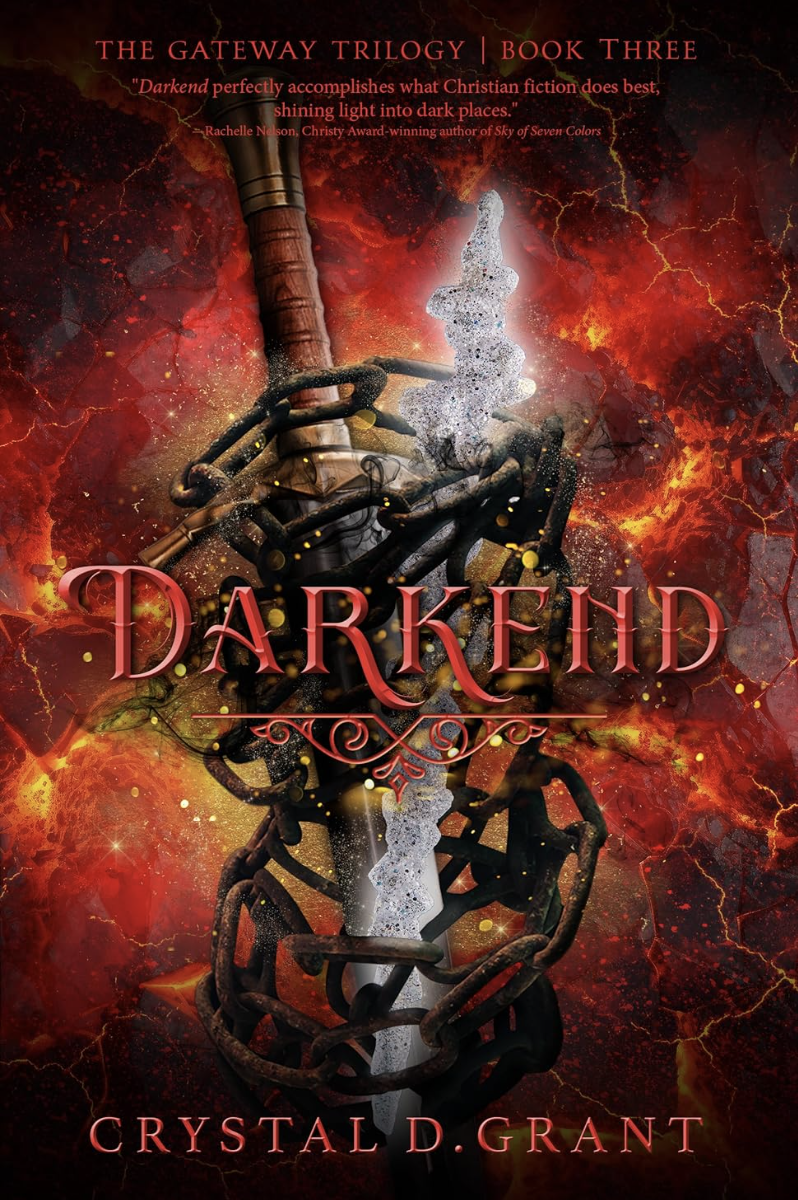
    EDIT: Hello, all! Having read the second book, Lightshed, I now have new insight into Grant’s intentions with the first book, and overall, it’s a positive view. As I predicted, the author used Seria’s choices in the first book to propell her to guilt and eventually repentance in the second. I still would have rathered that the author give us a feeling of dread as Seria crept closer and closer to Mason and joining the dark side, especially during that last kiss scene, which I felt none of. That would have solved the problem of us wanting them to get together even though Mason was still on the bad side. Regardless, I think it is a worthwhile read, especially if you read the second book alongside it. Take a look at my review of Lightshed here.

  • Eragon

    Eragon

    Reviewed by Jubilee Anderson

    GENRE: YA Dragon Fantasy

    RATING: ⭐⭐⭐

    COMP TITLE: Lord of the Rings

    One boy…

    One dragon…

    A world of adventure.

    When Eragon finds a polished blue stone in the forest, he thinks it is the lucky discovery of a poor farm boy; perhaps it will buy his family meat for the winter. But when the stone brings a dragon hatchling, Eragon soon realizes he has stumbled upon a legacy nearly as old as the Empire itself.

    Overnight his simple life is shattered, and he is thrust into a perilous new world of destiny, magic, and power. With only an ancient sword and the advice of an old storyteller for guidance, Eragon and the fledgling dragon must navigate the dangerous terrain and dark enemies of an Empire ruled by a king whose evil knows no bounds.

    Can Eragon take up the mantle of the legendary Dragon Riders? The fate of the Empire may rest in his hands.

    Writing

    There are debates as to whether Eragon is extremely cliched or excitingly fresh. I don’t think it’s accurate to say either. Each author has a set of things he is good at, and things he needs some work on. 

    On Metaphors…

    Paolini excels in crafting vivid metaphors to describe things. I felt like the page came alive through these metaphors, and it helped me learn a lot about the characters. Here are some examples of vivid language I gleaned from the text:

    “Exposed like an unrolled map”

    “An impressive array of knives swung from his belt.”

    “His black beard was roiled and knotted like his jaw muscles.”

    On Plot…

    There were definitely a few cliches in the plot, and yes, many ideas were borrowed from the Lord of the Rings. Eragon’s arc follows the “chosen one” arc. Elves are obviously tall, beautiful, and more skilled than humans at everything. Eragon’s mentor says something very similar to Gandalf in an intense action scene.

    “Run, you fool!”

    This being Paolini’s first novel, I can understand why his book was cliched. When you first start out, it’s hard not to copy what you’ve seen in other books.

    However, one thing I noticed was that Paolini did take Eragon’s “chosen one” arc a step further. As Eragon takes on his role, he learns responsibility. A mentor of Eragon instructs him in his role of leadership by telling him thus:

    “You must be kind and wise to all, for they put their trust in you. Don’t speak flippantly or without thought, because your words will have impact far beyond what you intend.”

    I think there is some truth to these words. The Bible, especially the book of Proverbs, tells us that our words and actions have impact on others besides ourselves. We ought to be wise with our words, and not fools.

    Now that we’ve talked a little bit about Paolini’s prose and writing style, let’s look at the core of the story: the theme.

    Worldview

    I want to start this section off by saying that I cannot 100% know Paolini’s worldview based solely off of the book Eragon. However, it is nearly impossible for an author not to insert at least a portion of their worldview into their stories. At the very least, the following ideas are the beliefs of Paolini’s characters.

    I discovered some very interesting quotes in this book. I have listed four of the most interesting ones below, along with my thoughts on them.

    On Following Your Heart…

    “What does your heart say?”

    Our modern world is infused with this idea that one should follow his own beliefs. “Follow your heart,” they say. But if we who are inside this world cannot see beyond ourselves to the Truth, how will we be able to judge rightly? We need Someone to come in from outside and show us what Truth means. I think I would rather say, “Follow your Creator.”

    On Forgiving and Forgetting…

    “If you can’t forgive, at least forget.”

    Eragon’s companion said this to him after he slayed a weaponless man Eragon wanted to show mercy to. Eragon is furious at his companion, but his companion begs for forgiveness. Again, this hearkens to a teaching that we ought to “Forgive and forget.” It is true that we ought to forgive. But the reason for our forgiveness flows from the amazing truth that Jesus forgave us of all our sins, and so we ought to forgive others, not simply because we should be nice to everyone or because we should “do unto others.”

    On the Subject of Gods…

    “He fervently thanked all the gods, known and unknown.”

    and…

    “What god would do this? Show yourself!”

    These statements say something about what Paolini believed about God. What exactly it says, I am not quite sure. It seems that he believed in a Being up in the sky, but not a personal one. Interestingly, Paolini seems to have some sort of moral code, as Eragon clearly states that murder of an unarmed person is evil, and stealing is wrong, but the basis for this code goes unmentioned.

    I am not totally sure what Paolini believes, but it is not Christian worldview. However, just because something is not Christian does not mean we can’t and shouldn’t read it. It simply means that when we read things like this, we know what the Bible says so that we can test these ideas against the Word of God.

    If you’d like to learn more about Paolini’s worldview, I found two articles expanding on some of the thoughts I had in this section. Please note that I have not read other articles from this person, so use discretion when browsing content on his website. This article was specifically on Eragon, and the following article, while on book 2 in the Inheritance Cycle, digs deeper into Paolini’s worldview than the first article.

    To Watch For

    • Swearing: There are several mentions of characters cursing. The words “damned,” “ass,” and “hellfire” are each used once.
    • Sorcery: A witch prophesies the future. Witchcraft and fortunetelling are portrayed as something good that helps the main character.
    • Sexual Content: Eragon removes a woman’s shirt to heal a deadly wound and sees her bare back.
    • Violence: There are descriptions of dead bodies, including that of an impaled baby, whip wounds, men getting shot with arrows/stabbed, broken bones. One character describes a religious sect that makes limb offerings and drinks blood.

    Overall, I enjoyed reading Eragon. Despite the differences in worldview, he wrote a book that kept me hooked until the end. I really appreciate Paolini for having a satisfying ending, since I do not have time to be forced into reading the entire series if it ends in a cliffhanger! My good irl friends may convince me to read the next one, though. 😀

    Have a blessed day!

    PAPERBACK PRICE: $9

    DATE PUBLISHED: 2002

    Buy on Amazon

  • 10 Resources For Fantasy Writers

    10 Resources For Fantasy Writers

    Hello! The Book Bardess is back with her top 10 resources for fantasy writers! (or writers in general). Looking for help on structuring your latest novel? Have you fallen to The Great Enemy Procrastination and can’t seem to knock him away? These blogs, websites, or books might help. Let’s dive in!

    K.M. Weiland’s blog: Helping Writers Become Authors

    I am a full-on plotter, and I know I’m not the only one. Weiland does an amazing job explaining plot, theme, and character using the 3-Act Structure. I began exploring Weiland’s blog when I was writing Knightfall. The problem with Knightfall was that the middle sagged.

    Nothing happened.

    The plot was stagnant.

    After subscribing to read Weiland’s weekly tips and implementing what she said, I was able to build a plot that didn’t sag in the middle! Key word: implementing!

    Author Media

    Are you serious about publishing but aren’t sure how to build your platform? Have you published a book but it’s not selling well? Check out Thomas Umstattd Jr.’s website and blog! With posts from how to please your varrious readers to how to build an awesome website, you’ll find lots of advice and experience here.

    For Ye Medievalists and Fantasy Writers:

    Rebecca Shedd’s Blog Archives

    Rebecca Shedd’s blog archives are a huge resource for medieval fantasy or historical writers! Here you’ll learn everything from the different clothing trends in the 12th century to how they sailed ships. I love this place because not only is it an awesome store of research, it’s a great place for the history geeks!

    Story Embers

    You want to plot or edit your first novel, but the problem is, you don’t have a ton of time to scroll through long posts. Did you know, Story Embers’ downloadable pdfs are super easy to fill out and are an awesome help? Want to go a step further and receive weekly writing tips or grab the opportunity to join webinars and summits with other writers? Subscribe to their email list!

    Creating Character Arcs by K.M. Weiland

    Get the same structuring advice as with Weiland’s blog without having to spend hours online! It has basically the same things as the blog, just in paper form. 

    Getting Into Character by Brandilyn Collins

    Brandilyn has some great tips for crafting characters, from subtexting to finding out your character’s core motivation. I have used the second chapter of Getting Into Character so many times that I don’t even have to open it up anymore to remember what to do!

    5 Editors Tackle 12 Major Flaws of Fiction by C.S. Laskin

    I had just finished a draft of Knightfall. As I sat looking at almost 100 pages of a Google doc, I wondered how I was going to edit it all. This book helped me a ton and it will help you, too. It explains 12 major problems a lot of writers struggle with, gives examples and signs that you might have this problem in your novel, and shows you how to fix it!

    For Ye Procrastinators & Writers with Severe Cases of Writer’s Block:

    The Most Dangerous Writing App

    Have you ever sat down prepared to write and then all of a sudden you couldn’t think of anything to say? The Most Dangerous Writing App motivates and forces you to write something fast. Keep writing or all progress will be lost! Some find this tool stressful, others think it’s the best way to get words on the page. Personally, I’m the latter. 

    For Ye Grammar Nerds (Or Grammar Oppositionists):

    Word Hippo

    I am definitely an Oppositionist. However, especially when doing line edits for Knightfall, I found Word Hippo to be extremely useful!

    A notebook & pen

    I know, I know. This isn’t the kind of resource you were looking for. But the truth is, no website, book, or pdf can make you write words on a page. The only way to write a novel is to sit down and actually write. So, what are you waiting for?

  • Crafting Theme with Autumn Crane

    Crafting Theme with Autumn Crane

    Transcript:

    Jubilee Anderson:
    Hey everyone! Welcome back to The Book Bardess podcast! Today we’re going to be crafting theme with Autumn Crane!

    Autumn loves to create things—she is a cake decorator, musician, and of course, an author who has been writing consistently for two years. No matter what genre Autumn is writing in, she strives to mix hope and humor with a truthful depiction of the world. In everything, she wants to glorify God and bring Him joy.

    So Autumn, thank you so much for joining me today. I am so excited!

    Autumn Crane:
    Yes, thank you for having me!

    Jubilee Anderson:
    So, in your own words, how would you define theme?

    Autumn Crane:
    I would say theme is the heart of the story. It’s the message the reader takes away at the end. Theme is the universal truth that everyone can carry from it.

    Jubilee Anderson:
    That’s great. So what themes resonate with you in other authors’ books?

    Autumn Crane:
    The ones that resonate most are the themes I’ve been struggling with. The things that are hard for me to learn, or that I’m in the process of learning. Getting that boost of encouragement from a story is powerful.

    For me, themes like growing up, change, and community really hit home, because those are things I’ve been wrestling with.

    Jubilee Anderson:
    Yes, that’s definitely true for me as well—things like having a lot of siblings, sibling rivalry, love, and forgiveness. Those are some themes that resonate with me.

    How do you use symbolism or imagery to reinforce your theme without being too obvious?

    Autumn Crane:
    First, don’t worry about it too much, because what’s in your heart will come out whether you’re trying to or not—which can be both scary and really cool.

    For me, symbolism is usually something I slip in during the moment. If you’re not setting out with the goal of “teaching a theme,” it usually won’t come across as preachy.

    If you find a fun moment where something symbolic fits, add it in. People may notice or they may not, but either way it adds depth.

    Jubilee Anderson:
    That’s really good. I don’t remember exactly how he said it, but S.D. Smith talks about how when you’re a Christian, your faith naturally comes out in your stories—whether you’re trying to or not.

    So here’s a similar question: How do you balance exploring a meaningful theme without becoming too preachy?

    Autumn Crane:
    It’s really about giving it over to God. I’ll pray, “Lord, I know you’re leading me to put this into my book—help me do it in a way that honors you.” And it works out.

    Sometimes, when you hand your draft to someone and ask, “What messages are you getting from this?” you’ll find that God has woven in something even better than what you intended.

    If your goal isn’t to teach a lesson, it usually won’t come off as preachy.

    Jubilee Anderson:
    That’s a really good point. How does theme shape other elements of your story like plot, setting, or tone?

    Autumn Crane:
    I’d say theme affects characters the most, because it often overlaps with what your character is learning. Once it shapes your character, it naturally spreads into the plot, setting, and tone.

    For me, characters drive the story, so their journey—and the theme they’re living out—ends up woven into everything.

    Jubilee Anderson:
    Yes, they’re all so closely connected. What advice would you give to writers who struggle to identify the theme in their own work?

    Autumn Crane:
    Look at what’s happening in your life—your theme often reflects that.

    If you’re going through change or new relationships, your themes might naturally be about building community or navigating life changes.

    Also, have someone else read your work and tell you what messages they see.

    Another tip I learned in middle school literature class was to start a sentence with “The author believes that…” and fill in the theme you think the book conveys. Then cross out “The author believes that,” and what’s left is the theme. That exercise has been really helpful, and I can even use this method on myself by reading my own writing and asking, “Is this what I want readers to take away about what I believe?”

    Jubilee Anderson:
    That’s really interesting. Your English teacher must have been great. So what resources would you recomment for people trying to craft the theme of their next story?

    Autumn Crane:
    I’m not big on books about writing, but I’ll give a shameless plug for the Young Writers Workshop. The community there is incredible and always willing to help.

    Also, just read good books. Study how themes are woven into the ones you love. And look at how God is teaching you lessons in your own life. If you pay attention to how you’re learning, it’ll help you write characters who learn in authentic ways, and that helps your readers learn too.

    Jubilee Anderson:
    That’s really good. We’re almost wrapped up with our interview today, but I have one more question: Where can listeners find you online?

    Autumn Crane:
    You can find me on the Young Writers Workshop and through events like Crazy Writing Week, Crazy Editing Week, (Note: the previous two links are not up to date) and Crazy Writing Month. Look up “Autumn Crane” and you’ll find me.

    Jubilee Anderson:
    Everyone, go check out the Young Writers Workshop!

    Laughing emoji
    Upside-down smiley face emoji

    Thank you so much for joining me today, Autumn. This has been so much fun.

    Autumn Crane:
    Thank you!

  • The Balter of Ashton Harper

    The Balter of Ashton Harper

    By Millie Florence

    The Balter of Ashton Harper cover

    Book Review by Jubilee Anderson

    BALTER (Verb) – To dance artlessly, without particular grace or skill, but usually with enjoyment.

    Ashton Edward Harper had three problems, and two of them were his sisters. Unfortunately, the worst problem, the one that is not a sister, might determine the next few years of Ashton’s future.

    Through a balter of events, Ashton finds himself on a carriage headed for his dream school, Overmorrow Academy. However, Ashton’s stomach is dancing with anxiety. Because if he can’t win the scholarship, his dreams might be dashed. 

    Then, mysterious magic wreaks havoc on the travelers. Alone in the woods and separated from his sisters, Ashton tries to make sense of a magic he thought only existed in fairytales. Much more is at stake than attending the school of his dreams.

    Middle grade fantasy The Balter of Ashton Harper includes themes of forgiveness, siblinghood, responsibility, and chasing dreams.

    After reading Millie Florence’s first book, Honey Butter, for free, I knew I wanted to read The Balter of Ashton Harper as well. This year (2025), I had the privilege of meeting Millie at a writer’s conference. Of course, I also bought a signed copy of her book. 

    It went beyond my expectations. She wrote unique characters into a unique world with exceptional style, and delivered a deep theme. And honestly, who can beat that snappy first line of the first chapter? 👌 (It’s up at the top, at the beginning of the blurb)

    I definitely related the most to Ashton, but I also related a lot to Drusilla, the older sister. Millie kept the story whimsical and fun, while still making me yearn for Ashton to go to Overmorrow like he’d always wanted. Very sweet story, and an awesome sibling book!

    4 and a half stars. ⭐⭐⭐⭐☆

    Absolutely no content labels.

    As usual with Millie’s books, I came away inspired to love and cherish my siblings. This theme in particular resonated with me because I have a passion for writing that I sometimes put before my family on the priority list. Ashton’s story reminded me that my family is always more important than my dreams.

    I highly recommend The Balter of Ashton Harper! If you’ve read it and want someone to fangirl about it with, just balter over here and shoot me a message. I await your reply…

    (Hey, look! I learned a new word!)

  • Writer’s Block with Mj Falcon

    Writer’s Block with Mj Falcon

    Follow Mj on instagram @mj_falcon_creatives

    Transcript:

    Jubilee:
    Hey everyone, welcome back to The Book Bardess podcast for an interview with MJ. As an 18-year-old Christian author, MJ has always enjoyed creative writing and mainly writes fantasy and contemporary. She started writing poetry at age six but switched to crafting fiction stories when she was nine. Since then, she has finished four books and several short stories. Outside of writing, MJ enjoys drawing, doing theater, and watching movies.

    Today we’re going to talk with MJ about writer’s block—why it happens and how to get out of it. So MJ, thanks so much for joining me today. I’m so excited! Let’s dive in. How would you define writer’s block in your own experience?

    MJ:
    Thanks for having me! Well, generally when people think of writer’s block, they think it’s just not having any idea what to write—but there are so many different versions. There’s the “no ideas” kind, the “no motivation” kind, the “no energy,” or even the “no time” kind. For me, most of my writer’s block comes from a lack of motivation or as a procrastination tactic. I’ll do anything other than write when I’m in a block.

    It’s like I have all these ideas in my head, but something inside just won’t let me write for some reason. It’s really annoying.

    Jubilee:
    That is so me. Procrastination is my biggest writer’s block.

    MJ:
    Yeah, exactly.

    Jubilee:
    Can you recall a specific time when you struggled with writer’s block? What do you think triggered it?

    MJ:
    I actually have two specific times that come to mind. The first was when I was brand new to being a serious writer. I was working on this pirate book, and I thought it was going to be my thing—like, “I’m going to be a pirate author!” I finished it and had people edit it, and it was a total dumpster fire. There was no plot, no structure—looking back now, I’m like, “What was I thinking?”

    I was devastated. I’d put all my energy into that one story, thinking it would be my big break, and I didn’t have a backup plan. I went months without writing because I didn’t know what else to work on. Now, I have the opposite problem—too many ideas! But that was the first time I really faced writer’s block.

    The second time was with my current project. A friend of mine originally gave me the story idea and shared a bunch of brainstorming snippets with me. I was reading them one day, and they were so beautiful and well-written that I actually started crying. I thought, “Why can’t I write like this? She’s writing my story better than I can.”

    It made me feel like I wasn’t good enough to do the story justice. But she encouraged me and reminded me that I’m a good writer too. She told me to write for me, not for anyone else. And that really helped shift my mindset. Everyone has a unique voice, and no one can tell a story the way you can.

    Jubilee:
    That’s so true. I don’t know if I’ve experienced exactly that, but I’ve always known I wasn’t a great writer, so I expected critique—and that’s exactly what I got.

    MJ:
    Well, hey, that’s good that you were open to it. I was… not. I thought I had it all figured out!

    Jubilee:
    That totally makes sense. What are some personal strategies you’ve used to overcome writer’s block?

    MJ:
    I love this question. I feel like whenever you search for advice online, it’s always the same stuff—make a playlist, do a collage, use writing prompts. That doesn’t work for me.

    What does work is consuming media with the same vibe as what I’m trying to write. My current project is set in a circus, so I read circus-themed books and watched The Greatest Showman. That kind of inspiration gets the creative juices flowing.

    Also, I recommend reading over just watching. Books show you sentence structure, tone, and how things are worded—it helps you grow as a writer.

    Another tip is changing your physical position when writing. Not just location, but how you’re sitting. Sometimes just putting my laptop on my lap and changing the angle unlocks something, and suddenly I’m writing like crazy.

    Reading your own old writing helps too. Sometimes you’ll find random gold nuggets in what you thought was cringy. Younger me was randomly deep, and I’ll come across something and think, “Wait, that was actually good.”

    Jubilee:
    Same! Old writing can be terrible, but sometimes it’s surprisingly good. I’ve also noticed that reading in your genre while writing definitely helps with inspiration. There’s a reason people say to do it.

    MJ:
    Yes! I was reading like twelve books in my genre a few weeks ago, and it was so helpful. Oh, and another tip—do something boring. Boredom leads to creativity. I can’t tell you how many plot holes I’ve fixed while doing the dishes!

    Jubilee:
    Yes! My best ideas come when I’m doing something like walking or cleaning—totally unrelated to writing, but something active.

    MJ:
    Exactly. You step away, and suddenly the ideas just come to you.

    Jubilee:
    Has writer’s block ever helped you discover something new about your writing process or yourself?

    MJ:
    Yes. I’ve realized I put way too much pressure on myself to get it right the first time. I have this all-or-nothing mindset—if it’s not going to be perfect, I don’t want to do it at all. But I read something online that helped: If it’s worth doing well, it’s worth doing poorly.

    The example they gave was brushing your teeth—maybe you’re supposed to brush for two minutes, but brushing for thirty seconds is better than not brushing at all. Same thing with writing. First drafts don’t have to be perfect. They just help you figure out what works and what doesn’t. So I always say, “Write your garbage. It’s your garbage. You can fix it later. No one has to see it.”

    Jubilee:
    That’s an awesome mindset for writing in general.

    Okay, here’s a question I had some thoughts on, as well—do you think social media or modern technology contributes to writer’s block?

    MJ:
    Do you want to go first?

    Jubilee:
    Sure!

    I think it does. I’ve noticed that if I check social media first thing in the morning and then try to write, nothing comes to me. Social media is passive—you don’t really have to think. But writing is active. Turning on social media before getting to your latest writing project is like eating candy before an apple.

    So for me, starting the day with writing before social media makes a big difference.

    MJ:
    Wow, that was deep! And I totally agree. Social media is kind of mind-numbing—entertainment just gets poured into your brain and shuts down your creativity. Sometimes it can help, like if you’re looking for prompts, but most of the time it’s just a distraction.

    I’ll open my phone to play music while I write, and next thing I know, I’m watching TikToks an hour later. It just eats up time, and I’m like, “What happened?”

    Jubilee:
    Right? It’s so easy to fall into that.

    MJ:
    Yeah. Definitely a major distraction for writers.

    Jubilee:

    What advice would you give to new writers facing serious writer’s block?

    MJ:
    I’d say, find what works for you. Like with art—when I first started drawing, I did landscapes and was terrible at it. I thought I was just a bad artist. But then I started drawing people and machinery, and I realized, “Oh, I can draw—I just needed to find my thing.”

    Same with writing. I started with poetry, then tried mystery—which I could never finish, even though I loved reading mysteries. Eventually, I found my groove with contemporary, sci-fi, and some magical realism.

    So even if you want to write a certain story or genre, it might not work for you right now. Build your skills with what you’re good at, and then branch out.

    Also, find people to share your writing with. Accountability helps so much. When someone’s waiting on you to send a chapter, it gives you motivation to keep going. And when they give you encouragement, it makes you want to write more. Surround yourself with people who are excited about your stories.

    Jubilee:
    Absolutely. Encouragement from others can be a huge motivator.

    Okay, one last question I just thought of—can you think of any resources you’ve used to overcome writer’s block? You mentioned music earlier.

    MJ:
    Yeah, I use a lot of playlists—different ones for different vibes. I also like collecting things that remind me of my characters, like trinkets or clothes. I even have a full costume for one of my characters, and it’s just really cool to have that tangible connection.

    Jubilee:
    That’s awesome. So where can people find you online?

    MJ:
    I just started an Instagram account! There’s not much on there yet, but I’ll be posting more soon. You can follow me at @mj_falcon_creatives—that’s all lowercase with underscores between the words.

    Jubilee:
    Perfect. I’ll link that in the description. Thanks so much, MJ, for doing this interview with me—it was super fun.

    MJ:
    Yeah, it was awesome. Thanks for having me!

    Jubilee:
    You’re welcome. Alright, bye everyone!

    *****

    Did you enjoy this interview? Check out my interview on crafting theme here!

  • Building Characters with Reilly Smith

    Building Characters with Reilly Smith

    Check out Reilly’s writing podcast, The Inked!

    Transcript:

    Jubilee:
    Howdy everyone, welcome back to The Book Bardess podcast for an interview with Riley Smith. Riley is a young writer with a passion for the Lord and a love of animals, chocolate, the outdoors, and of course, books. Currently, she's working on one main project—a young adult fiction series called The Amulets of Averon. Riley has been writing seriously for about five years, ever since she decided to write her own version of Pilgrim's Progress. (P.S.—it didn’t turn out that way.) When she’s not writing, you can find her swinging outside, in a theater production, or working on things for her writing podcast, The Inked.

    So, when you first start planning out a book, how do you start building your characters?

    Reilly:
    When I go about outlining or preparing to write a story, I always start with the character. First, I think about how they look physically. Once you have that, you get a better feel for where the character is going emotionally. For example, I might decide I want my character to have blonde hair, blue eyes, and be a girl—or maybe a guy—and then I ask: what is this character’s main conflict in the story? Those are my two big starting points: physical description and conflict. Then I go into more detail from there.

    Jubilee:
    I'm working on a new project, and just giving a name to that character and thinking about what they look like—it makes them feel like a whole new person.

    Reilly:
    For sure. I always have so much fun with physical descriptions—I tend to go a little overboard. I have a character with bright white hair, dark tan skin, and green eyes. She’s so much fun. I asked a friend to do some character art and she said, “This is such a weird character description... but I kind of love it.” She’s drawing her now, and I’m really excited to see the finished product. It just makes the characters feel so much more real.

    Jubilee:
    That's really cool. White hair sounds awesome.

    Reilly:
    It’s kind of a tendency of mine. That’s like the third or fourth character I’ve given white hair!

    Jubilee:
    Wow! I also like white hair—it’s just cool. So once you’ve got their physical appearance down, how do you make your characters relatable to the reader?

    Reilly:
    There are two ways you can make a character relatable: through their main conflict or through smaller, more personal quirks. The main conflict is usually the driving force—like their greatest fear or deepest desire. That might be relatable to some readers, but not all. That’s where the small conflicts—or what I call quirks—come in.

    Quirks are the fun, weird, little things about your character that a lot of people can relate to. Maybe they have ADHD—many of my characters do. Maybe they play with their hair or pick at their nails. I had one character who eats tomatoes like apples—just washes them and bites right in. That was based on one of my best friends. She read that part and said, “Wait a minute, that’s me!” And I was like, “Yep!” Those little things help readers connect with characters in a really personal way.

    Jubilee:
    I love that! I've done the same thing—based quirks on my friends. Since they're real people, it helps make the characters feel more real, too.

    Reilly:
    Exactly. I often base parts of my characters on my family or friends. Not every part of them, but definitely certain traits. And it’s always funny when my friends read my stories and go, “This is why you were asking me all those questions!”

    Jubilee:
    That’s really funny. Do you usually write characters that change a lot through the story, or ones who stay mostly the same?

    Reilly:
    It depends on the story. Sometimes I have characters with a big overarching arc—they start young and naïve, then go through something difficult and grow into who they’re meant to be. They might experience emotional, physical, or spiritual changes, especially in my more spiritually-themed books.

    Other times, I have characters—like side characters—who don’t change as much. But overall, most of my stories center around growth in some way.

    Jubilee:
    So how do characters change throughout the story?

    Reilly:
    It usually happens at a turning point, where they make a big decision that could completely change their life. For example, one of my characters had to decide whether to join the army. His parents were against it, but he wanted to go fight with his friends. That decision ended up changing him—it gave him a deep sense of compassion he didn’t know he had.

    Most change comes through traumatic or chaotic events. But in genres like rom-coms—which I write just for fun—characters might change from small, meaningful moments, like helping someone or seeing something that shifts their perspective. So it can be either big or small moments that bring about growth.

    Jubilee:
    Yes! In the Bible, it says suffering produces character, and that’s so true. It can lead to good or bad character depending on the direction of the arc. Speaking of arcs—do you plot out your stories or just write them?

    Reilly:
    Oh, I’m a total planner. I plan every detail. I have outlines, plot charts, worldbuilding charts, character charts—and if it’s a fantasy story, I’ll make a full encyclopedia. There’s so much lore and backstory. I end up with like 20 pages of planning documents. It’s kind of an issue, honestly!

    Jubilee:
    That’s amazing! Have you heard of K.M. Weiland’s plotting resources?

    Reilly:
    I’ve heard of it, but I haven’t used it.

    Jubilee:
    She really emphasizes how character, theme, and plot are all connected. One thing I learned from her blog is that characters often start off believing a lie. Through the events of the story, they gradually begin to believe the truth. I used to write conversion stories where the character believed a lie for 75% of the book, then suddenly switched at the end. But I realized character change happens gradually over the whole story.

    Reilly:
    Yes, absolutely. That makes so much sense.

    Jubilee:
    Have you come across any resources that you’d recommend to writers—whether they’re just starting out or have been building characters for years?

    Reilly:
    Honestly, I don’t use a ton of resources. My biggest tool is just observing people. My dad and I go on walks along the beach in the summer, and we people-watch. The more you understand real people, the better you can write believable characters.

    People are dynamic—they’re always changing, thinking, feeling, evolving. Your characters should be the same. Even if it’s an animal or fantasy creature with human-like thoughts, they should still be dynamic.

    Jubilee:
    That’s such a great point—watching people really is one of the best tools.

    Reilly:
    Just… don’t be creepy about it, okay? I’m not saying to go spy on your neighbors with binoculars!

    Jubilee:
    Haha! I read a writing book once where someone said they eavesdropped on people at stoplights. I was like... okay, I don’t think I’d go that far!

    Reilly:
    Yeah, that’s a bit extreme!

    Jubilee:
    Well, this has been awesome. One last question—where can listeners find you online?

    Reilly:
    You can find me mainly through The Inked Podcast socials. We’re on YouTube, and the podcast is also on Spotify. For more information or to submit questions, check out our website: theinkedworld.com.

    Jubilee:
    Awesome! Everyone go check that out! Thank you so much for doing this, Reilly!

    Reilly:
    It was a lot of fun!

    *****
    Did you enjoy this interview? Check out my interview on defeating writer's block here!