Category: Blog

  • Knightfall Interview

    Knightfall Interview

    Interview Transcript

    Tim:
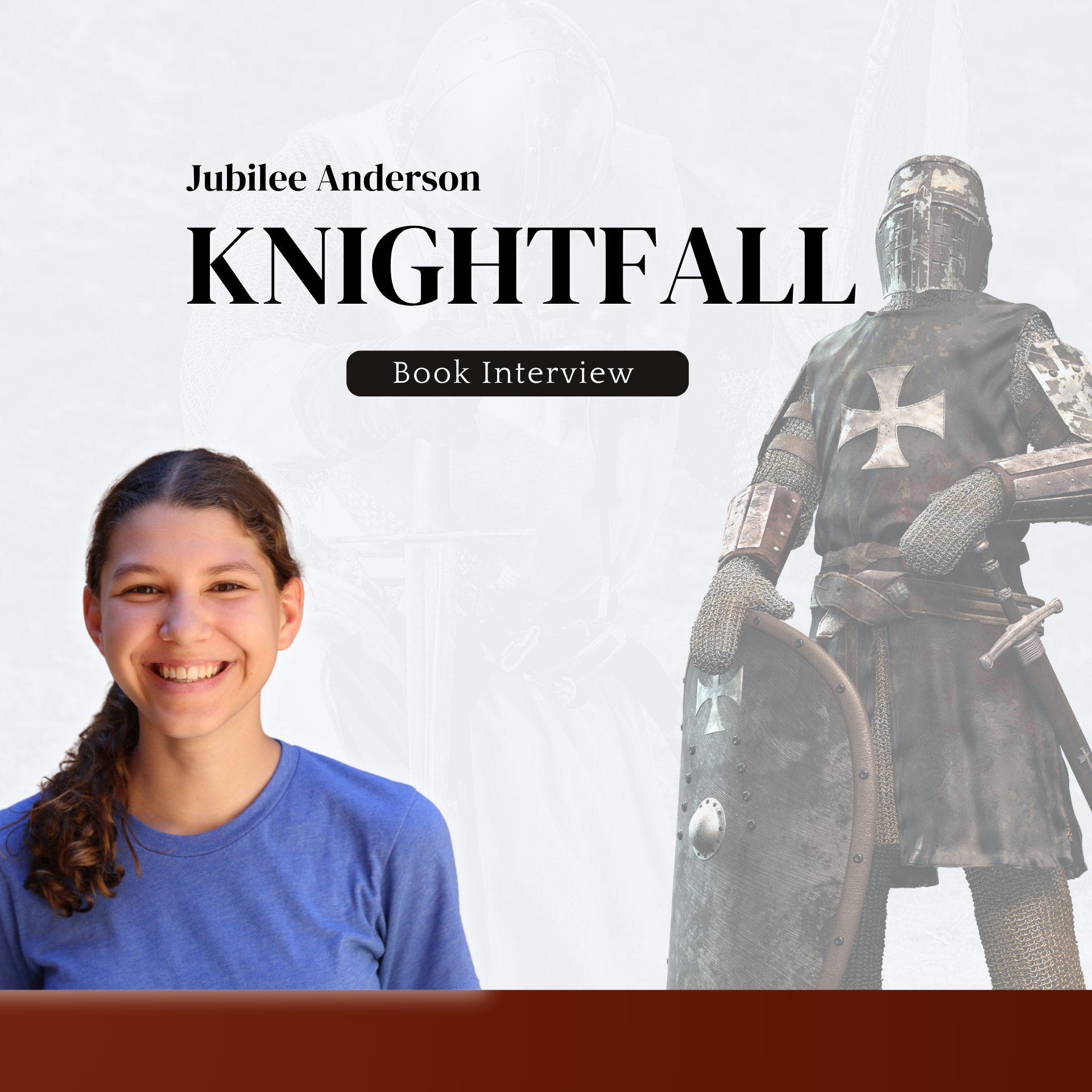
    Today I’m interviewing Jubilee on her book Knightfall. So Jubilee, tell me about your new book, Knightfall.

    Jubilee:
    Knightfall is a YA medieval fantasy, and it’s about this knight named Marcus who goes on an extremely urgent assignment to save the noble and his family from an attacking army. He needs to warn them before the army comes. And so the story follows him and tells whether he’s successful or not.

    Tim:
    Sounds interesting. So your motivation for writing this story—tell me a little bit about how did this even start?

    Jubilee:
    So a long time ago—well, it wasn’t actually that long ago, about a year and a half ago—I was reading with my mom. She has this curriculum that she does with us, and she reads us stories from literature. Some of them are not stories, some are poems. One of these poems was called The Listeners by Walter de la Mare.

    The poem is about a knight who goes up to a castle and knocks on the door, and no one answers him. But it’s implied that there are ghosts inside listening. The knight ends up turning around and walking away. That was the original inspiration for the story.

    The second inspiration was the Wingfeather Saga. There’s a plot twist at the end of that series, and I thought it was such a cool way to end a story. I didn’t want to copy it, but I wanted to end mine similarly—with a twist.

    Tim:
    Yeah, that’s fun. So when you started doing this, did you have people who helped you get your first version of the story put together, or did you do that mostly on your own?

    Jubilee:
    The first draft, I did mostly on my own. I wrote through the whole thing, and then I joined this online writing community. That was the first time I’d ever seen other writers in a group, critiquing each other’s work and helping each other grow.

    Tim:
    So did you already have a version of the book before you joined this community?

    Jubilee:
    Yeah, I did. Once I joined, I started learning a lot. I joined a critique group and submitted the story, and they gave me some amazing feedback. It was super helpful.

    Tim:
    What kinds of things did you hear from that group? What was one or two of the most helpful things?

    Jubilee:
    It’s hard to remember everything because I’ve gone through so many drafts.

    Tim:
    How many drafts have you gone through at this point?

    Jubilee:
    Seven drafts.

    Tim:
    Wow, that’s a lot.

    Jubilee:
    Yeah. One major thing they pointed out in the first draft was that I had missing pieces. There would be a character that would appear in one scene, then disappear, and then randomly reappear a few scenes later when I needed him. That was a mistake I had to fix.

    Tim:
    What do they call that—scene continuity or something?

    Jubilee:
    We usually just call it consistency throughout the story.

    Tim:
    Okay, yeah. That makes sense. So now that you’re on your seventh draft, what have you learned by going through all of them? And what would you do differently if you wrote the first draft again?

    Jubilee:
    There’ve been huge changes since that first draft. The original was about 50 pages. Now it’s around 100. So it’s doubled.

    Tim:
    Is that because of added descriptions, or just more natural story progression?

    Jubilee:
    This is something I would do differently next time. I’m a huge plotter. I like to plan my story from the beginning, middle, to end. I recently learned a new way to structure a story that significantly improved the seventh draft. It would’ve saved me a lot of time early on.

    If the foundation isn’t strong or shaped right, it’s hard to build on. And by shape, I mean the story arc.

    Tim:
    So you were missing part of the arc originally?

    Jubilee:
    Yeah, the middle was missing. The beginning was great, the ending was awesome, but the middle sagged. Not much happened. That’s why the random character showed up—to fill space. But at the time, I didn’t understand how important the middle is. You can’t just have a character believe one thing the whole story, then suddenly change at the climax. The middle helps show the gradual change that makes the ending believable.

    Tim:
    Nice. So what are your plans for the book from here on out?

    Jubilee:
    I’m hoping this is the final revision—or at least close. If not, there’ll be an eighth revision. That one will focus more on sentence structure and grammar. Right now I’m basically rewriting the whole thing, but I’m excited. It’s looking good.

    Tim:
    So once you complete it, what are your publishing plans?

    Jubilee:
    Right now I’m planning to offer it for free to people who sign up for my email list on my website. If you sign up before March, (Edit: I actually released it in May) you’ll still get it when it comes out in March.

    Tim:
    That’s great. So where do people go to find the book?

    Jubilee:
    You can go to my website: jubileeanderson.com. There’s a pop-up to subscribe, and if you scroll down on the front page, there’s also a sign-up form.

    Tim:
    Awesome. For people out there who are thinking about writing a book—how many hours would you say you’ve spent writing Knightfall?

    Jubilee:
    A lot. Definitely more than 100. Probably around 500. I write every single morning for at least an hour, sometimes more.

    Tim:
    So if you’re excited to write a book, get ready for about 500 hours. But of course, this is one of your earlier books.

    Jubilee:
    Yeah. I’m hoping the next one goes faster.

    Tim:
    That’s exciting. Do you have another book planned?

    Jubilee:
    I do. I have several ideas in the brainstorming stage.

    Tim:
    Do you have a title yet?

    Jubilee:
    Not yet. I have three or four ideas, and I’m not sure which one to start.

    Tim:
    Do you have a favorite idea?

    Jubilee:
    Yeah, I just came up with one the other day that’s kind of a medieval romance fantasy. I think it would be really cool to write.

    Tim:
    That’s exciting. Well, thanks so much for being here today.

    Jubilee:
    Thank you for having me, Tim.

    Tim:
    Talk to you soon.

  • Analyzing: Return of the Jedi

    Analyzing: Return of the Jedi

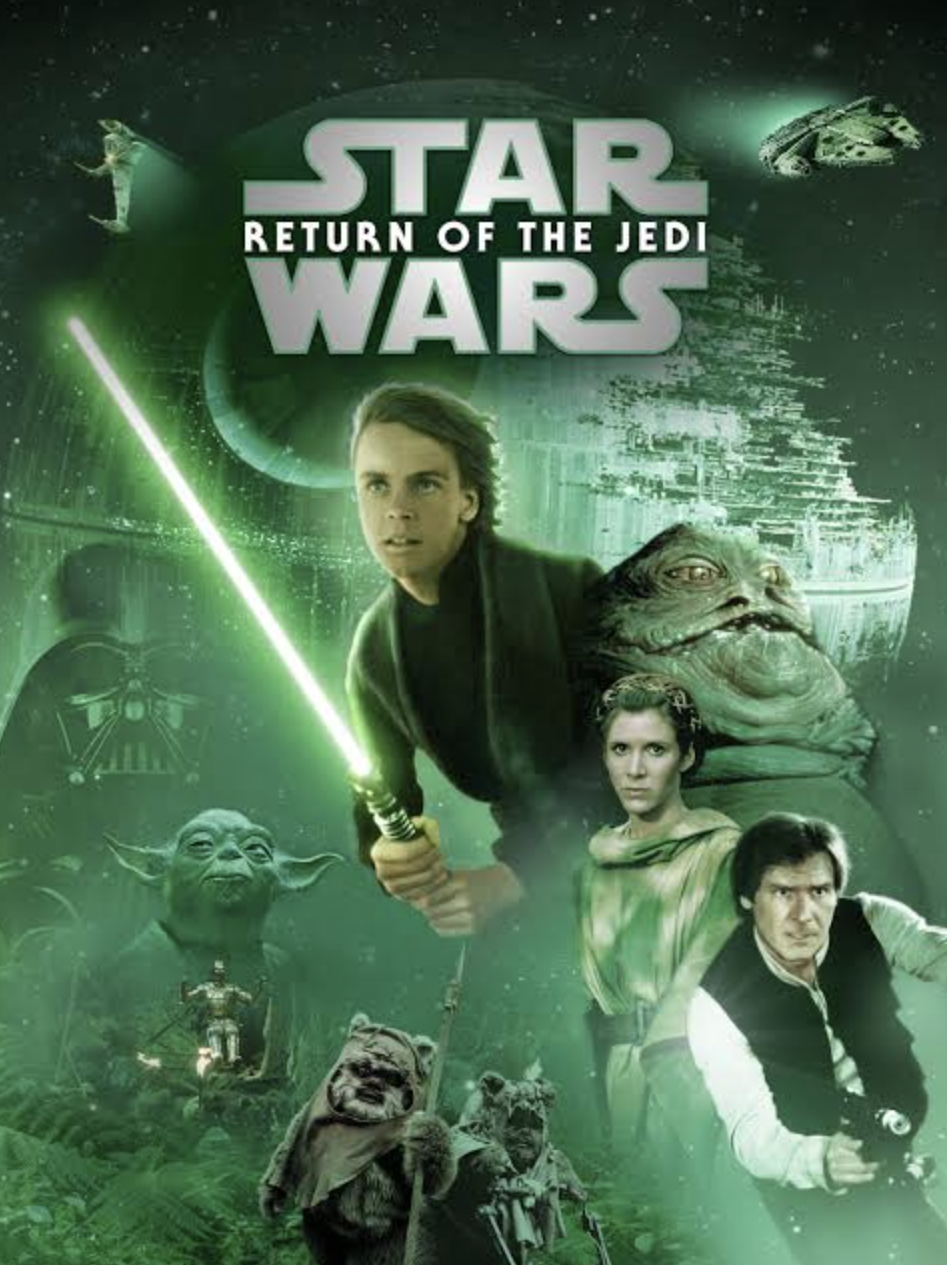
    Return of the Jedi cover

    Return of the Jedi: Star Wars OG #3

    Analyzer: Jubilee Anderson

    This post includes spoilers!

    A long time ago, in a galaxy far, far away….

    The Imperial forces have begun constructing a new, bigger, and more powerful Death Star than the one Luke destroyed in A New Hope. After rescuing Han Solo from imprisonment, Luke flies back to the Jedi Master Yoda to complete his training. Yoda tells him that the only way for him to become a Jedi is to face his father and kill him. After the death of his beloved master, Luke joins his friends in their mission to destroy the new Death Star. But not far into the journey, he realizes his presence is severely jeopardizing his friends’ safety.

    Return of the Jedi includes themes of good vs. evil, manhood, and loyalty. Luke not only faces hatred and overcomes it, but he brings someone else with him back to the Light Side.

    My Thoughts

    If the last movie did a good job of stirring up Luke’s internal conflict between hatred and love and giving in to his father’s request, this movie is even better. I have so many favorite scenes from this movie. The interaction between C3PO and the ewoks was so funny! It was really sweet when Luke reveals the truth to Leia about their identity, and I love the tension in the final scenes between Luke, Darth Vader, and Palpatine. This is the most touching of all the movies by far, and a neat wrap-up to the original Star Wars trilogy.

    Content Labels: Mild violence, romantic tension including several instances of kissing. The beginning scenes show women scantily clad, with only a bikini on. This is the major reason I’d give Return of the Jedi a 3 star instead of 4, and while it was effective to the plot, it was also very distracting.

    For Ye Writers!

    Character Arcs

    To recap, Luke’s Goal is to be a Jedi, and his Want is to be like his father. In the last movie, Luke overcame his pride and realized that he, too, could be subject to the Dark Side. 

    He also learned that his father was not actually the good man he had envisioned. But Luke still has this vision of what a good man looks like based upon who he thought his father was before he learned the truth. So let’s follow the major plot points through Luke’s character arc as he fully solidifies what it truly means to be a hero, and ultimately, a man.

    In Return of the Jedi, the call to action happens when Yoda tells Luke that he must kill his father to become a Jedi. Luke doesn’t accept this call to action right away. He doesn’t want to kill his father.

    With hope and yearning for his father to change to the Light Side, Luke eventually surrenders himself to the stormtroopers in order to try to convince Darth Vader to turn back. But Vader refuses, delivering Luke to Emperor Palpatine.

    Palpatine places Luke by a window to watch the destruction of the Rebel forces and the deaths of his friends. This is Luke’s final chance to resist hatred, but Palpatine lures him in. Luke battles Darth, but then realizes that he’s falling to the Dark Side just like his father did. He throws down his lightsaber. Enraged, Palpatine electrocutes Luke, but Darth Vader steps in front, sacrificing his life for Luke and becoming the man Luke originally imagined his father to be. 

    While Luke is certainly changed, there is a larger contrast between Darth Vader at the beginning and Darthat the end of the movie. Darth Vader at the beginning is a tyrant, but also somewhat a slave, willingly obeying Palpatine’s command. At the end, he dies for his son, overcoming his hatred in love and defeating Palpatine.

    As I mentioned in the analyzation of The Empire Strikes Back, there are three types of characters necessary to a positive change arc: the protagonist, a character stuck in the evil the protagonist wants to avoid, and a character already living the virtue the protagonist wants to achieve.

    Last time we discussed several options for the vice in this movie and we decided upon either hatred or pride (RotJ seems to lean heavier on the hatred aspect whereas the TESB seemed to lean more towards the pride aspect). 

    At this point, Luke has already overcome his pride, and now he must face the temptation to hatred and overcome it. Again, he must choose; will he follow the path of Obi Wan and Yoda? Or will he fall to the Dark Side and join Palpatine and Darth Vader? 

    Luke not only overcomes this temptation, he brings his father along with him to the Light Side.

    Plot Structure

    Take a look at the more in-depth analyzation of The Empire Strikes Back here on K.M. Weiland’s website.

    Characteristic Mom: Luke is back in Tatooine. They set out to rescue Han and succeed.

    Inciting Event: On his deathbed, Yoda tells Luke that the only way to become a Jedi is to face his father.

    Push Point: Luke joins his friends in their mission to destroy the Death Star’s shield, but regrets it when he realizes Darth Vader can sense him with the force.

    Pinch Point: Han and Leia run into Storm Troopers on Endor. Emperor Palpatine sets a trap for the Rebel ships coming to blow up the new Death Star.

    Midpoint: The Ewoks lead the Rebels to the shield generator on Endor. Luke reveals to Leia that Darth Vader is his father. He surrenders to the Empire and they take him to Darth Vader.

    Pinch Point: Luke fails to convince Darth Vader to turn from the dark side. “You underestimate the power of the dark side.”

    Lowpoint: Leia and Han are trapped by the storm troopers. Luke watches the Rebel ships being destroyed. He gives in to the temptation and fights his father. Luke cuts off Vader’s hand just like Vader cut off Luke’s hand. If Luke goes any further, he will become Darth Vader himself.

    Climax: Luke resists the temptation to give in to his anger and ultimately the Dark Side. He almost dies, but Darth Vader kills the Emperor, sacrificing his life and saving Luke. When Luke defeats his temptation, he becomes a Jedi knight and figuratively he becomes a man.

    Resolution: Everyone celebrates. Luke cremates Vader’s remains. He later sees his force ghost father Anakin beside his mentors Obi Wan and Yoda.

    Closing

    I hope this review/analyzation of Return of the Jedi has helped you see how plot, characters, and theme are tightly interwoven, and hopefully you can impliment some of these things in your own story. You can find the analyzations for movies 1 & 2 here and here.

  • Analyzing: The Empire Strikes Back

    Analyzing: The Empire Strikes Back

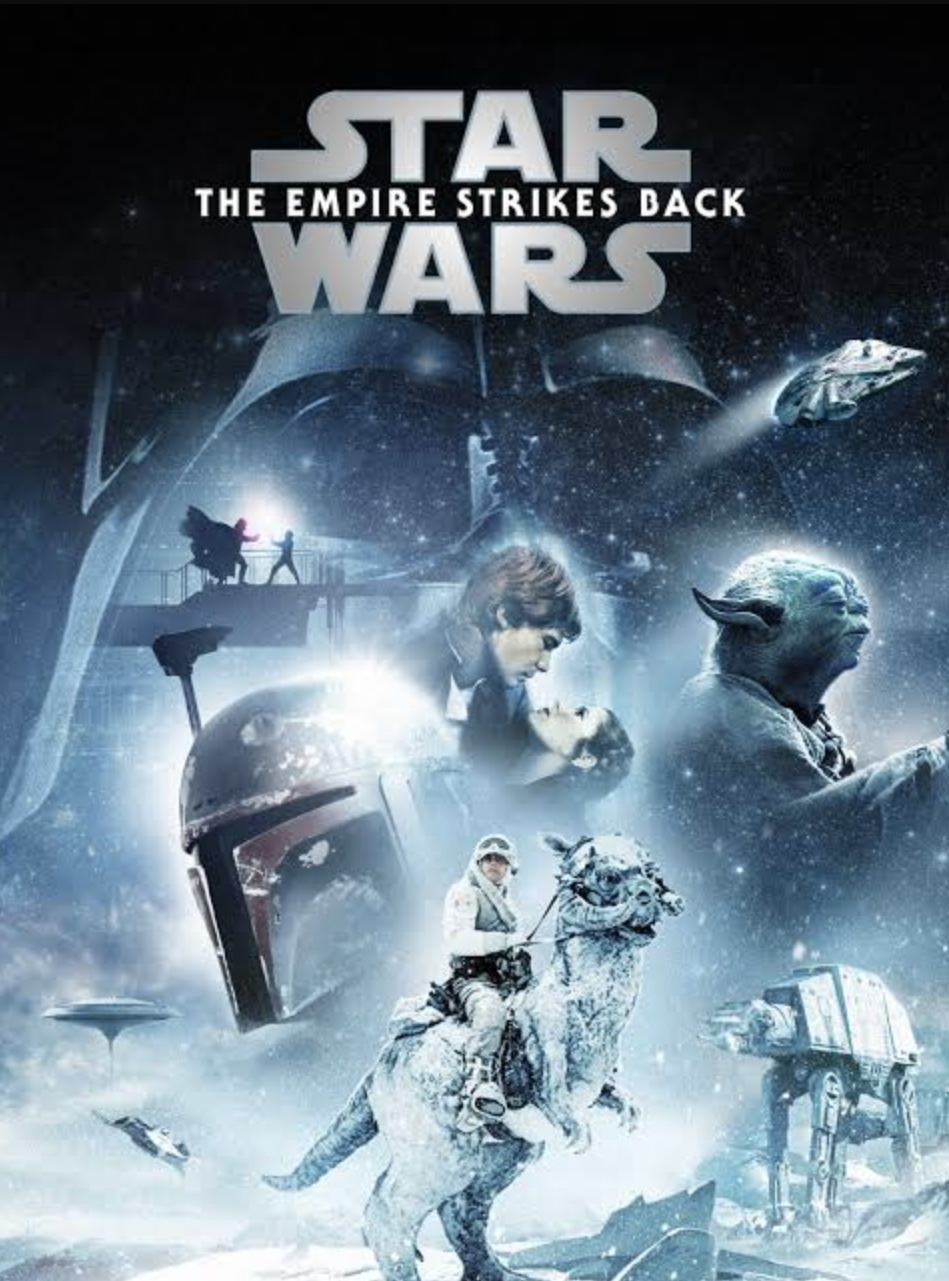
    The Empire Strikes Back cover

    The Empire Strikes Back: Star Wars OG #2

    Analyzer: Jubilee Anderson

    Remember, this post includes spoilers!

    A long time ago, in a galaxy far, far away….

    When his old mentor’s ghost tells Luke to go to another planet to train under a Jedi Master named Yoda, Luke immediately obeys. At the same time, the Rebel base is attacked, and Luke’s friends are forced to flee. Will Luke finish his training in time to face the evil lord, Darth Vader, or will his friends be killed by Vader’s forces?

    The Empire Strikes Back has themes of good vs. evil, loyalty, and romance.

    My Thoughts

    In the last post we talked about movie 1, A New Hope. Now I’m back to talk about the second movie.

    I heard a lot of spoilers before watching this movie, sadly, including one of the best plot twists in movie history. When I finally watched it, it was exactly how I expected. I was so shocked at meeting Yoda, I wondered if Luke had really found the right guy! I was really sad for Han and Leia, and I loved Luke’s character arc especially during the last half of the movie.

    I know I said this last time, but it’s true: George Lucas is a master storyteller!

    Content Labels: Romantic tension between characters, including multiple instances of kissing. 

    Takeaways: The ending of this movie was suspenseful, with some loose ends not tied until the third movie. I really, really loved Luke and Vader’s character arcs and relationship as protagonist and villain. I loved the theme of fighting for what’s right and watching how Luke overcame his lies and fears to embrace this truth.

    For Ye Writers!

    Character Arcs

    (Remember: this is a study of how Luke changes over the course of the movie. Also, lots of spoilers here! DON’T READ THIS IF YOU HAVEN’T WATCHED IT!!!)

    To recap from the last movie, Luke wants to “be a Jedi like my father”, by which he means that he wants to be like his father. So Luke has a Goal: to become a Jedi; and a Want: to become the honorable man his father was, willing to sacrifice for good. Now he just needs to get there. 

    In this movie, Luke accepts the call to action to become a Jedi when Obi Wan tells him to train under Yoda. When Luke first meets Yoda, he treats him with disrespect and impatience. He thinks he has it all figured out. But overtime, he learns to respect Yoda. 

    One day, Yoda sends him to fight Darth Vader, and Luke cuts off Vader’s head. He realizes it was all just a vision, and he looks into Vader’s mask. Inside is a reflection of a face that looks like his. Luke realizes that he could turn to the dark side if he does not guard himself from temptation. 

    He is faced with himself again at the climax, but this time in a different way. After cutting off Luke’s hand, Darth Vader reveals that he is Luke’s father. Vader tempts Luke to join the dark side, but Luke has learned his lesson. He doesn’t give in, but instead throws himself into the pit.

    At the beginning of the movie, Luke thought he knew how to be a Jedi and how to resist evil temptation. He was ignorant and stubborn. But in the end, he truly resists temptation and overcomes it. He actually knows this time and he’s willing to learn instead of ignorantly going on his way.

    In a story there are three main characters necessary to the plot of a positive change arc: The protagonist is the changing character. In The Empire Strikes Back, this character is Luke. Darth Vader (villain) is the one stuck in the evil Luke is trying to avoid, and Obi Wan Kenobi (mentor) is a perfect example of an impact character, or one actively living the virtue Luke is trying to achieve. 

    You may be asking, what evil is Luke trying to avoid? It was difficult to pinpoint an exact vice, but I came down to two. 

    The first one was pride. There are several hints that this is the vice throughout the movie. At the beginning, Luke thinks he has it all figured out and can resist evil on his own. Long before that, in the first movie, Darth Vader force chokes a man for telling him there is something wrong with his ship. These are instances of pride, but there isn’t a clear indication of humility from either Obi Wan or Luke, although there are traces of it.

    The second vice I thought of was hatred. Using the same instance of Darth Vader force choking the man in A New Hope, that certainly seems like an instance of hatred. There are other hints, like the way in which Darth became the dark lord, or in the third movie, when the Emperor tells Luke to give into his anger.

    Over the course of the story, Luke must choose who he will follow; Vader, or Obi Wan? Pride or Humility? Hatred or Love?

    Plot Structure

    Like in the last post, this section describes the plot of The Empire Strikes Back according to the 3-Act Structure. You can look at the more in-depth plot of this movie here on K.M Weiland’s website.

    Characteristic Moment: Luke is scouting out terrain. Han and Leia are in the Rebel base.

    Inciting Event: Luke is attacked by a wild animal. Once he escapes, Obi Wan’s ghost tells Luke to train under a Jedi named Yoda.

    Push Point: The Empire attacks the rebel base, forcing them to flee. Luke goes to Yoda’s planet while Han and Leia fly off in the Falcon

    Pinch Point: Emperor Palpatine tells Darth Vader that Luke, son of Anakin, is the new enemy they must hunt down.

    Midpoint: When Luke sees the vision of Darth Vader but then he touches it and sees himself.

    Pinch Point: Luke sees Han and Leia being tortured in a vision and he goes to save them against his mentor’s warnings. Vader forces Lando to betray Han and Leia.

    Lowpoint: Han is frozen in carbonite. Luke finds out that his father, the man he looked up to and wanted to be like, is Darth Vader.

    Climax:  Luke chooses not to accept his father’s offer to join the Dark Side and ends up hanging at the bottom of a building.

    Resolution: Luke is rescued by Leia and they fly away to safety.

    Closing

    I hope this review/analyzation of The Empire Strikes Back has helped you see how plot, characters, and theme are tightly interwoven, and hopefully you can impliment some of these things in your own story. You can find the analyzations for movies 1 & 3 here and here.

    When you watched The Empire Strikes Back, what did you think of the plot twist? I’d love to hear about it. Share with me here!

  • Analyzing: A New Hope

    Analyzing: A New Hope

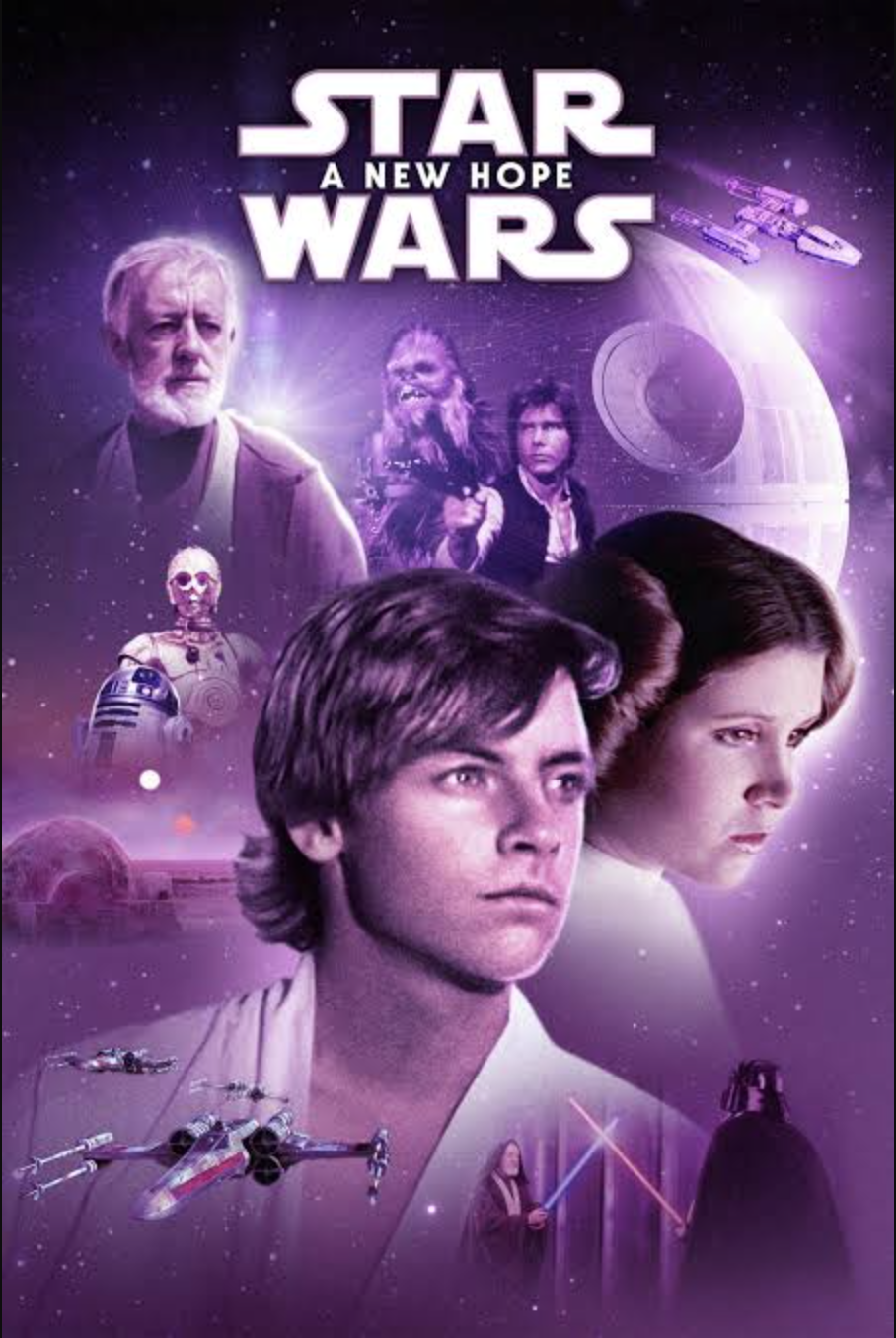
    A New Hope cover

    A New Hope: Star Wars OG #1

    Analyzer: Jubilee Anderson

    A long time ago, in a galaxy far, far away….

    Luke has always wanted to do something more meaningful and adventurous than living his boring life in the desert planet of Tatooine. When Luke and his uncle bring home two droids, Luke tries to fix them up. But a secret message he discovers inside one droid will change the course of his future.

    A New Hope, Star Wars movie 4 (or #1 in the OG 3) has threads of good vs. evil, coming-of-age, and adventure.

    Why A Star Wars Series?

    I got my first taste of Star Wars at my cousin’s birthday party years ago. Since then, I’ve watched various movies in the series many times with my siblings.

    The last time we watched the Original 3 (OG 3), I decided to write a collection of movie reviews. But in addition, I also wanted to analyze the plot structure of the films so that writers who have watched them can understand the three-act structure and use it in their own novels. So buckle up, and let’s take a ride through outer space! BEWARE: SPOILERS AHEAD!

    My Thoughts

    I love it. It’s action packed with chase scenes, laser shooting, space ships, and cool interstellar planets. Everything you can expect from a thriller sci-fi movie.

    George Lucas is a master storyteller. Every time I watch this, I’m drawn in by the first movie. The second and third movies have awesome plot twists, but A New Hope really holds itself up. 

    My favorite scenes are the beginning scene when Luke finds the secret message, and the scene at the end when Luke and Han get their metals.

    Content Labels: Light romantic tension between characters, including flirting and a kiss on the cheek. 

    Takeaways: The ending of the movie left me smiling. As I said before, A New Hope could be a stand-alone. It holds itself up very well, and provides a good foundation for the next two movies and their awesome plot twists.

    For Ye Writers!

    Now let’s move on to the next section. This is the part for you writers out there. While I wrote all of this content on my own, I didn’t learn about story structure by myself! The links in the next section come from K.M. Weiland’s blog, Helping Writers Become Authors. She has an awesome platform, and I highly recommend checking it out!

    I’m just gonna warn you, this next part contains full spoilers of the entire movie. Trust me, this is not a movie series you want spoilers on!

    Character Arcs

    (This section describes how Luke changes internally throughout the movie)

    Luke has lived in his Normal World, Tatooine, his entire life. He’s tired of the normal and yearns for adventure.

    When Obi Wan tells Luke that his father, Anakin, was a Jedi, Luke says he wants to be a Jedi, too. But to be more specific, Luke didn’t just want to be a Jedi. He wanted to “be a Jedi like my father.” He wanted to be like his father. That hero, that honorable man.

    At the end of the story, Luke has achieved his goal. He’s not a Jedi yet, but he’s done something honorable. He’s saved his people from the Death Star. His Want is fulfilled.

    Luke has more of a flat arc in the first movie, in that he doesn’t learn anything specific. His Want wasn’t changed in any way, but he’s changed the world around him, and now he lives in the New World instead of the Old.

    Plot Structure

    This section describes the plot of A New Hope according to the 3-Act Structure. Again, while I discovered the plotpoints for this movie myself, I wasn’t the first person to do so, and I didn’t teach myself. K.M. Weiland has the entire plot of A New Hope laid out here if you’d like to study this more in depth.

    Characteristic Moment: Luke’s “normal world” is in Tatooine, living with his aunt and uncle. He wants to do something meaningful in life.

    Inciting Event: Luke finds Leia’s secret message in R2-D2 mentioning a man named “Obi Wan Kenobi.”

    Push Point: Luke’s aunt and uncle die, forcing him to go with Obi Wan.

    Pinch Point: The bad guys blow up Alderaan

    Midpoint: They’re sucked in by the Death Star’s gravitational pull. 

    Pinch Point: They end up in the trash compactor which the bad guys turn on

    Lowpoint: Darth Vader kills Obi Wan. Luke, Han, and Leia make it to the ship and fly away in grief.

    Climax: The Death Star is about to blow up the Rebel base. Luke flies a ship down the tunnel and shoots a laser beam into the mechanism that will destroy it. Death Star explodes.

    Resolution: Luke and Han get medals for their bravery. Luke has done what he always wanted to do: something meaningful. He’s a hero now.

    Closing

    I hope this review/analyzation of A New Hope has helped you see how plot, characters, and theme are tightly interwoven, and hopefully you can impliment some of these things in your own story. You can find the analyzations for movies 2 & 3 (or 5 & 6) here and here.

    Was this post helpful? What is one thing you’ve learned from a movie/book you’ve analyzed? I’d love to hear about it. Share with me here!

  • Ignite

    Ignite

    Ignite

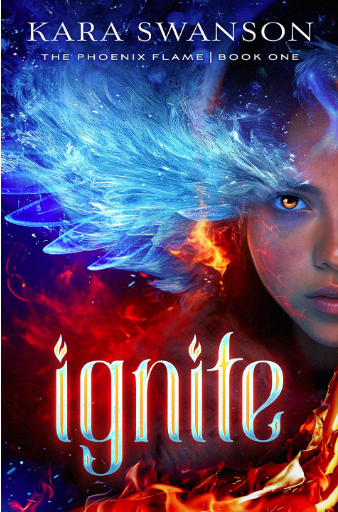
    by Kara Swanson

    Ignite cover

    Book Review by Jubilee Anderson

    She’s a young phoenix living with her father and the other weary phoenixes. Mara. The one who will stay awake and keep watch against humans while the others hibernate. The humans of whom her father has always warned are bloodthirsty killers. But the humans find her anyway.

    This beautifully woven novel has themes of coming-of-age, hope, and finding one’s identity.

    I’d already read two of Kara’s books, Dust and Shadow, by the time my mom got me Ignite as a gift. I was thrilled. I had been on Kara’s street team for Ignite, and I could finally read it!

    It took me a minute to become fully invested in the plot, but after the ball got rolling, so to speak, it was good. I was kept in suspense, unsure of who was the good guy and who was the bad guy. I had no idea who to trust until the end. This is a well-written masterpiece!

    I felt like I didn’t connect with Mara as much as I would have liked, but I suspect that’s because the book wasn’t directed towards me. For that, I give it 4 stars. Otherwise, no complaints.

    CONTENT: Emotional & verbal abuse, violence

    TAKEAWAYS: I have never been in a situation like Mara’s, but even though I didn’t relate, I felt satisfied by the ending. While I look forward to the next book, I didn’t feel like I was left in complete suspense, thankfully! I’m so glad I was given the opportunity to be one of Kara’s Fiery Souls for Ignite. Can’t wait to see where this next book will take the story!

    Have you read Ignite, or any of Kara’s other books? What did you think? Tell me about it here!

  • Poetic Surrender

    Poetic Surrender

    Poetic Surrender

    by Molly McTernan

    Book Review by Jubilee Anderson

    Normally, I review fiction books, but I think this book is worth putting here.

    Poetic Surrender is a faith-based collection of poetry by Molly McTernan. It includes themes of faith (obviously), friendship, and everyday life.

    I was recommended this book for a long time. I kept hearing about it, seeing the cover, and reading Molly’s poetry on her website. Finally, I bought it. I read it at least twice on the first day.

    So many of the poems connected with me. I felt like Molly had experienced some of the same things as me — love of books and writing, loneliness, life with family and siblings. My favorite poems are “Who I Write For,” “I Want a Friend,” and “Bluebird.” She has room to grow as a poetry writer, but it’s the themes that really connect to me. God is using this book for good! It has fully earned 4.5 stars.

    Poetic Surrender was an encouragement in faith. A reminder. A reminder to love, to write for God, to be thankful, to see the small moments in life. Like the bluebird on my windowsill. Or the color red. Or the sound of the violin. I did not regret a penny of what I spent!

    Do you read poetry? What kind of poetry do you like? Respond to me here!

  • The Weeping Knight

    The Weeping Knight

    The Weeping Knight

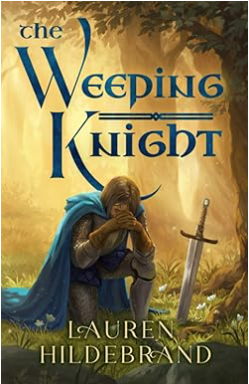
    by Lauren Hildebrand

    The Weeping Knight cover

    Book Review by Jubilee Anderson

    No matter how hard he tries, Edric de Pleure can’t live up to God’s standards. Only Talisan, Edric’s squire, thinks he is perfect. When Talisan is captured by an evil knight, Edric must battle to get him back. Only a mystic sword, through the power of a certain One, can save him from this evil man.

    The Weeping Knight overflows with themes of justice, mercy, and living morally.

    I first found this book while asking around for more books to read in my genre. It was recommended to me by some writing friends of mine, so I bought it. This is now one of my favorite stand-alones. Lauren deals with heavy themes in a way that is gentle and respectful, but also brings hope. She weaves an incredible story that keeps you reading. I loved the poem at the end. It’s a poem every young man (and woman) should commit to memory these days! Lauren could grow in style and uniqueness, but otherwise I have no complaints. I rate thee five stars.

    CONTENT:

    Lauren deals with a lot of heavy themes from a Christian worldview and handles them very well. These include demonic powers and sexual abuse (not graphic, but mentioned throughout). The book overall is heavy, but the ending is worth it!

    TAKEAWAYS:

    I closed The Weeping Knight, happy to leave our Sir Edric to any journeys that should follow. He’s been through a lot, but he can finally rest, physically, emotionally, and spiritually.

    Do you like books that incorporate faith into the themes? Why or why not? Tell me about it here!

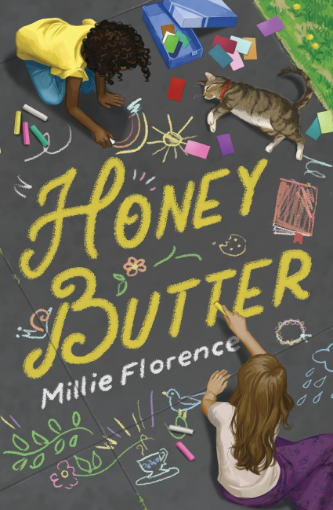
  • Honey Butter

    Honey Butter

    Honey Butter

    by Millie Florence

    Book Review by Jubilee Anderson

    Everlasting Blue, Slam Dunk Orange Dragon Fruit Pink…

    Seven-year-old Jamie Johnson is obsessed with collecting paint cards. In fact, it’s the only thing that can distract her from fighting with her older sister, during the long, boring summer. Until, that is, a mysterious girl moves in next door. Laren Lark is almost thirteen, a homeschooler, and a passionate poet.

    Despite their differences, the two girls quickly become friends and Jamie begins to think that the summer doesn’t have to be so boring. After all, Laren says that adventure can be found anywhere—it’s all about where you look.

    I first read this book as a PDF after signing up for Millie’s email list. I finished it the same morning, and was late for breakfast. Even though I read the PDF for free, (and you can, too!) I ended up buying two copies; one for my younger sister and one for my girl cousins.

    This is the best MG contemporary sister book I’ve ever read! Even though the main character is seven, I could still relate to her struggles. Even though I don’t have older siblings, I related to her annoyance with her older sister. I have a large family just like her. I related to her friendship with a unique girl who was way older than her.

    The parents didn’t simply preaching lessons to Jamie. They were loving, and especially the mom, was present. She was there. A friend, a mentor, Mommy to Jamie.

    I loved all the poems and poetic language. I loved the paint cards, the library, and the fun holidays on the calendar each day. This is a five-star read!

    The ending of Honey Butter is so beautiful. I came away encouraged to love my sister. Sometimes in the moment of an argument, it’s easy to see little sisters as annoying, but they’re not. They are blessings from the Lord — Every single sibling I have is a blessing.

    This is your next family read-aloud, or the present for your sister’s birthday! It’s short, but worth it!

    PUBLISHED: 2017

    PAPERBACK: $12

    Visit Millie’s website and get Honey Butter for free or read my book review on The Balter of Ashton Harper!

  • Interview with Chloe Ann

    Interview with Chloe Ann

    Hey everyone! It’s been a while since I’ve posted! Today I’m excited to share a writer interview with Chloe Ann! Chloe shares some wonderful reasons as to why she writes and encourages fellow writers to think about their reasons for writing as well. Enjoy!

    ……………………………………………………………………………………………………………….

    Thank you so much for doing this, Chloe!  I can’t wait!

    Absolutely! I’m so excited for this interview!

    When did you start writing and what did you write?

    When did I start writing? I can’t remember. We’ve got pictures of me at seven or eight years old with a notebook and a pen posing for author pictures. I loved writing, loved creating story worlds, and still love doing both of those things. 

    My earliest story was about a princess (me) who helped rescue an orphan slave girl. It was all handwritten and I’m missing half the pages of the story, but I think she lived in some fantasy country that really resembled the Bahamas. She had a private litter (you know, the thing people carry you around on?), private bedrooms, a private pool. She was pretty cool.  

    For a few years, I was working on one story, entitled “Chosen One” with a girl protagonist who looked and acted a lot like me. It was a pretty fun story, but fell apart as I went farther in the writing process. Later, for school, I was assigned to write a short story. I didn’t think I could do it because I could only come up with dramatically long plots. But I did it and we got it published in a private anthology. After that, I dabbled in short stories and wrote a handful of them. I wrote a couple novellas and finally stumbled onto the project I’m working on now.

    How have your stories progressed over the years?

    Progression is painful. It means admitting you were wrong. And yes… myself at eight years old was writing my stories wrong. But progression is also about making things better. My stories have gotten better in their plots. They no longer have the stereotypical “hero saves the princess” kinda ring to them. My characters have become stronger. They’re not perfect cardboard cutouts, slapped into a world that I thought would be fun to live in. They’re the embodiment of ideas and beliefs, designed to show readers what is truth and what isn’t. 

    Why do you write? 

    Harriet Beecher Stowe was the daughter of the president of a theological college in Ohio in the 1800s. In 1851-52, she published her most famous work, Uncle Tom’s Cabin, in a cry of outrage against slavery. Her book caused such a massive tidal wave that Abraham Lincoln is recorded as having said upon meeting Mrs. Stowe, “So you’re the little woman who wrote the book that made this great war.”

    Words have power. Since I can remember, I’ve wanted to be Harriet Beecher Stowe. I’ve wanted to write against injustice in the world and write to tell others about the Truth that can set them free. Words have the power to change people’s lives. Writers, use that power for the glory of God. 

    If you could go back and give your younger self writing advice, what would it be?

    Firstly, don’t make your main character yourself. A good hero has failures, losses, and is usually pretty awful until the author makes them good. My eight year old self did not know that.

    My favorite writing quote is by Richard Bach (I have no clue who he is, but I like his quote): “A professional writer is an amateur who didn’t quit”. If I could tell myself one thing, it would be to not quit. All those years of awful stories eventually paid off.

    Do you have any encouragement/advice for young writers reading this post?

    If your identity is in your writing, then it’s in the wrong place. That might sound weird coming from a writer, but it’s true. You’re going to get bad reviews, going to get negative critiques, and going to struggle with writer’s block. You may think you’re over all that, but you’re not.

    Clinging to writing as your identity is building your house in sand. When waves and hard stuff come, your house is going to collapse. Put your identity in the One who is worth it. Writing’s not worth it. Once you figure that out, you’re well on your way to becoming a good author.

    Have you published anything?  Where did the inspiration for this project come from?

    The project I’m currently working on is a fantasy series about a young man who is separated from his past life. Saved by friends he once called enemies, he now is fighting enemies he once called friends. Forged by Fire combines the themes of “The Chronicles of Narnia” with the allegorical elements of Pilgrim’s Progress and the sacrifices of Les Miserables. It’s the first book in my series, “Condemned” and will hopefully be soon followed by the second book, whose working title is Child of the Darkness

    The inspiration for Forged by Fire carried over from those old stories I wrote years ago. I always wanted to write an allegory and hide truths in a tale that would hopefully touch a reader and make them evaluate their own life. My editor will be getting Forged by Fire in October and it will probably be a year before the book is released. 

    What is the best place for a reader to find you if they were interested in you and your stories?

    If you’re on the Young Writer’s Workshop, then follow me there. I would love to chat about anything and everything at any time!

    I’m working on building my blog, centered around reading literature that goes against the cultural trend. Since the website is still being built, I can’t release the name just yet. But it should be up and running within the next few months. 

    ……………………………………………………………………………………………………………….

    I’m so glad I got to do this interview! For those on my email list, you can look forward to more information about Chloe’s website and blog at a later date. Have a blessed day!

    UPDATE: Chloe has a blog. If you are wondering where to find your next book to read, I cannot recommend her website enough! Check it out here!

    If you enjoyed this post and would like to receive updates on new content, subscribe to my email list here!