
A Little Princess
By Frances Hodgson Burnett
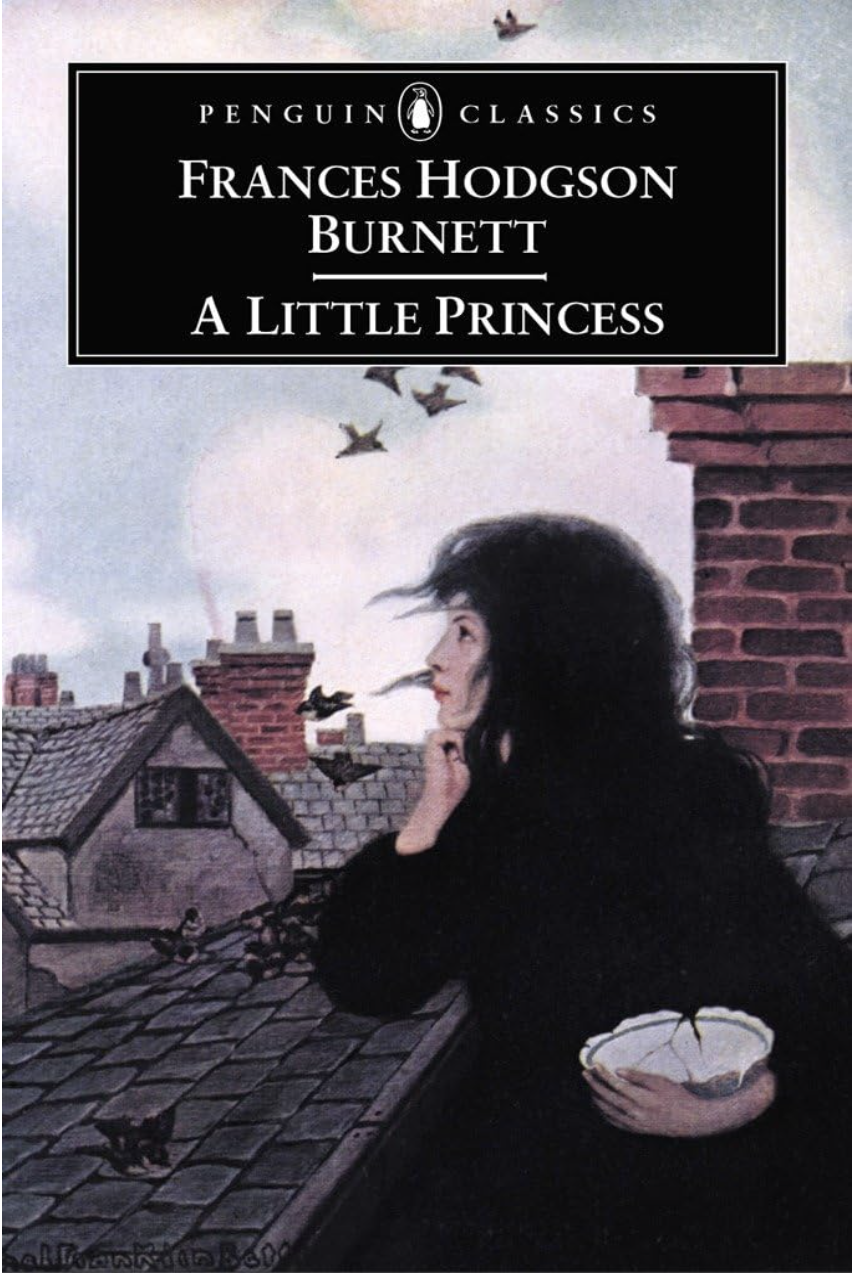
Reviewed by Jubilee Anderson
GENRE: Classical Middle Grade Fiction
RATING: ⭐⭐⭐⭐
Sara Crewe, an exceptionally intelligent and imaginative student at Miss Minchin’s Select Seminary for Young Ladies, is devastated when her adored, indulgent father dies. Now penniless and banished to a room in the attic, Sara is demeaned, abused, and forced to work as a servant. How this resourceful girl’s fortunes change again is at the center of A Little Princess, one of the best-loved stories in all of children’s literature.
Writing
Another classic, you guys! I read a lot of classics growing up.
A Little Princess is one of my favorite middle grade books. The story uses a chiasm, making for a beautiful reflection of ideas from beginning to end.
Define ‘Chiasm’
According this article on gotquestions.org, “A chiasm is a literary device in which a sequence of ideas is presented and then repeated in reverse order. The result is a “mirror” effect as the ideas are “reflected” back in a passage.”
*****
I will show you the chiasm in two quotes, one from the beginning of the book, and one from the end. Both concern our protagonist, Sara Crewe.
At the beginning, the headmistress, Miss Minchin, stares at all Sara’s wealth while surveying Sara’s room and says, “She has been provided for as if she were a little princess.”
And at this point, it is perfectly true. Sara has everything she could want. She is a princess on the outside.
Then her father dies, and Sara, now penniless, must work as a servant in Miss Minchin’s school.
(Spoiler Alert!)
*
*
At the end of the book, Sara gains back all she has lost and becomes a rich princess again. Both at the beginning, and at the end, she has physical wealth. That is the chiasm. But there’s a deeper chiasm. At the end, Sara is a princess in a different way. Miss Amelia scolds her sister Miss Minchin when Sara has left, saying, “She behaved herself like a little princess even when she was a beggar.”
You see, Sara is no longer only a princess on the outside; she is a princess on the inside.
*
*
(Welcome back!)
Let’s dig deeper into the theme in our next section.
Worldview
Our quote for this section is by Sara, speaking to her friend Ermengarde who dislikes reading and has difficulty learning.
Things happen to people by accident…A lot of nice accidents have happened to me. It just happened that I always liked lessons and books, and could remember things when I learned them. It just happened that I was born with a father who was beautiful and nice and clever, and could give me everything I liked.
Perhaps I have not really a good temper at all, but if you have everything you want and everyone is kind to you, how can you help but be good tempered? I don’t know how I shall ever find out whether I am really a nice child or a horrid one.
Perhaps I’m a hideous child, and no one will ever know, just because I never have any trials.
Events by Accident?
Let’s start at the top. Sara believes that who a person is and what they will become is entirely by accident. This is an interesting peek into Frances Hodgeson Burnett’s worldview. Because there is no God to explain the good things that happen to Sara, forces like Nature or Magic give Sara a generous heart and send her food when she is starving. The author mentions Heaven as a place for good people after they die, but never mentions God.
The problem is, events don’t happen by accident. God created all of us for a reason and put us into our exact places at the right time. It couldn’t have been a coincidence! Interestingly, Sara alludes to something like this later, when speaking to a friend of hers. (Emphasis added)
You see, now that trials have come, they have shown that I am not a nice child. I was afraid they would. Perhaps that is what they were sent for.
Perhaps it was. Just like Frances Hodgeson Burnett intentionally put trials into Sara’s story so that she would change into a true princess, God intentionally guides our stories to mold us into true princes and princesses of his kingdom.
Content Labels
- Mention of King Henry having 6 wives.
- Mention of a princess whose head was put on a pike.
- The headmistress, Miss Minchin, is cruel to Sara
A Little Princess
The more I read classics, I am convinced that the amount of time authors thought about their book’s themes far exceeded the time authors spend on theme today.
Frances Hodgeson Burnett was partially right. She delivered the powerful theme that even through trials, those who endure will be refined into better people than before. She missed out that God is the one who guides us and places those trials in our lives so that we will run towards him.
PAPERBACK: $11
PUBLISHED: 1905