Category: For Young Writers

  • 10 Resources For Fantasy Writers

    10 Resources For Fantasy Writers

    Hello! The Book Bardess is back with her top 10 resources for fantasy writers! (or writers in general). Looking for help on structuring your latest novel? Have you fallen to The Great Enemy Procrastination and can’t seem to knock him away? These blogs, websites, or books might help. Let’s dive in!

    K.M. Weiland’s blog: Helping Writers Become Authors

    I am a full-on plotter, and I know I’m not the only one. Weiland does an amazing job explaining plot, theme, and character using the 3-Act Structure. I began exploring Weiland’s blog when I was writing Knightfall. The problem with Knightfall was that the middle sagged.

    Nothing happened.

    The plot was stagnant.

    After subscribing to read Weiland’s weekly tips and implementing what she said, I was able to build a plot that didn’t sag in the middle! Key word: implementing!

    Author Media

    Are you serious about publishing but aren’t sure how to build your platform? Have you published a book but it’s not selling well? Check out Thomas Umstattd Jr.’s website and blog! With posts from how to please your varrious readers to how to build an awesome website, you’ll find lots of advice and experience here.

    For Ye Medievalists and Fantasy Writers:

    Rebecca Shedd’s Blog Archives

    Rebecca Shedd’s blog archives are a huge resource for medieval fantasy or historical writers! Here you’ll learn everything from the different clothing trends in the 12th century to how they sailed ships. I love this place because not only is it an awesome store of research, it’s a great place for the history geeks!

    Story Embers

    You want to plot or edit your first novel, but the problem is, you don’t have a ton of time to scroll through long posts. Did you know, Story Embers’ downloadable pdfs are super easy to fill out and are an awesome help? Want to go a step further and receive weekly writing tips or grab the opportunity to join webinars and summits with other writers? Subscribe to their email list!

    Creating Character Arcs by K.M. Weiland

    Get the same structuring advice as with Weiland’s blog without having to spend hours online! It has basically the same things as the blog, just in paper form. 

    Getting Into Character by Brandilyn Collins

    Brandilyn has some great tips for crafting characters, from subtexting to finding out your character’s core motivation. I have used the second chapter of Getting Into Character so many times that I don’t even have to open it up anymore to remember what to do!

    5 Editors Tackle 12 Major Flaws of Fiction by C.S. Laskin

    I had just finished a draft of Knightfall. As I sat looking at almost 100 pages of a Google doc, I wondered how I was going to edit it all. This book helped me a ton and it will help you, too. It explains 12 major problems a lot of writers struggle with, gives examples and signs that you might have this problem in your novel, and shows you how to fix it!

    For Ye Procrastinators & Writers with Severe Cases of Writer’s Block:

    The Most Dangerous Writing App

    Have you ever sat down prepared to write and then all of a sudden you couldn’t think of anything to say? The Most Dangerous Writing App motivates and forces you to write something fast. Keep writing or all progress will be lost! Some find this tool stressful, others think it’s the best way to get words on the page. Personally, I’m the latter. 

    For Ye Grammar Nerds (Or Those Who Oppose Grammar):

    Word Hippo

    I am a little but of both. However, especially when doing line edits for Knightfall, I found grammar to be extremely useful. Word Hippo helped me a lot!

    A notebook & pen

    I know, I know. This isn’t the kind of resource you were looking for. But the truth is, no website, book, or pdf can make you write words on a page. The only way to write a novel is to sit down and actually write. So, what are you waiting for?

  • Crafting Theme with Autumn Crane

    Crafting Theme with Autumn Crane

    Transcript:

    Jubilee Anderson:
    Hey everyone! Welcome back to The Book Bardess podcast! Today we’re going to be crafting theme with Autumn Crane!

    Autumn loves to create things—she is a cake decorator, musician, and of course, an author who has been writing consistently for two years. No matter what genre Autumn is writing in, she strives to mix hope and humor with a truthful depiction of the world. In everything, she wants to glorify God and bring Him joy.

    So Autumn, thank you so much for joining me today. I am so excited!

    Autumn Crane:
    Yes, thank you for having me!

    Jubilee Anderson:
    So, in your own words, how would you define theme?

    Autumn Crane:
    I would say theme is the heart of the story. It’s the message the reader takes away at the end. Theme is the universal truth that everyone can carry from it.

    Jubilee Anderson:
    That’s great. So what themes resonate with you in other authors’ books?

    Autumn Crane:
    The ones that resonate most are the themes I’ve been struggling with. The things that are hard for me to learn, or that I’m in the process of learning. Getting that boost of encouragement from a story is powerful.

    For me, themes like growing up, change, and community really hit home, because those are things I’ve been wrestling with.

    Jubilee Anderson:
    Yes, that’s definitely true for me as well—things like having a lot of siblings, sibling rivalry, love, and forgiveness. Those are some themes that resonate with me.

    How do you use symbolism or imagery to reinforce your theme without being too obvious?

    Autumn Crane:
    First, don’t worry about it too much, because what’s in your heart will come out whether you’re trying to or not—which can be both scary and really cool.

    For me, symbolism is usually something I slip in during the moment. If you’re not setting out with the goal of “teaching a theme,” it usually won’t come across as preachy.

    If you find a fun moment where something symbolic fits, add it in. People may notice or they may not, but either way it adds depth.

    Jubilee Anderson:
    That’s really good. I don’t remember exactly how he said it, but S.D. Smith talks about how when you’re a Christian, your faith naturally comes out in your stories—whether you’re trying to or not.

    So here’s a similar question: How do you balance exploring a meaningful theme without becoming too preachy?

    Autumn Crane:
    It’s really about giving it over to God. I’ll pray, “Lord, I know you’re leading me to put this into my book—help me do it in a way that honors you.” And it works out.

    Sometimes, when you hand your draft to someone and ask, “What messages are you getting from this?” you’ll find that God has woven in something even better than what you intended.

    If your goal isn’t to teach a lesson, it usually won’t come off as preachy.

    Jubilee Anderson:
    That’s a really good point. How does theme shape other elements of your story like plot, setting, or tone?

    Autumn Crane:
    I’d say theme affects characters the most, because it often overlaps with what your character is learning. Once it shapes your character, it naturally spreads into the plot, setting, and tone.

    For me, characters drive the story, so their journey—and the theme they’re living out—ends up woven into everything.

    Jubilee Anderson:
    Yes, they’re all so closely connected. What advice would you give to writers who struggle to identify the theme in their own work?

    Autumn Crane:
    Look at what’s happening in your life—your theme often reflects that.

    If you’re going through change or new relationships, your themes might naturally be about building community or navigating life changes.

    Also, have someone else read your work and tell you what messages they see.

    Another tip I learned in middle school literature class was to start a sentence with “The author believes that…” and fill in the theme you think the book conveys. Then cross out “The author believes that,” and what’s left is the theme. That exercise has been really helpful, and I can even use this method on myself by reading my own writing and asking, “Is this what I want readers to take away about what I believe?”

    Jubilee Anderson:
    That’s really interesting. Your English teacher must have been great. So what resources would you recomment for people trying to craft the theme of their next story?

    Autumn Crane:
    I’m not big on books about writing, but I’ll give a shameless plug for the Young Writers Workshop. The community there is incredible and always willing to help.

    Also, just read good books. Study how themes are woven into the ones you love. And look at how God is teaching you lessons in your own life. If you pay attention to how you’re learning, it’ll help you write characters who learn in authentic ways, and that helps your readers learn too.

    Jubilee Anderson:
    That’s really good. We’re almost wrapped up with our interview today, but I have one more question: Where can listeners find you online?

    Autumn Crane:
    You can find me on the Young Writers Workshop and through events like Crazy Writing Week, Crazy Editing Week, (Note: the previous two links are not up to date) and Crazy Writing Month. Look up “Autumn Crane” and you’ll find me.

    Jubilee Anderson:
    Everyone, go check out the Young Writers Workshop!

    Laughing emoji
    Upside-down smiley face emoji

    Thank you so much for joining me today, Autumn. This has been so much fun.

    Autumn Crane:
    Thank you!

  • Writer’s Block with Mj Falcon

    Writer’s Block with Mj Falcon

    Follow Mj on instagram @mj_falcon_creatives

    Transcript:

    Jubilee:
    Hey everyone, welcome back to The Book Bardess podcast for an interview with MJ. As an 18-year-old Christian author, MJ has always enjoyed creative writing and mainly writes fantasy and contemporary. She started writing poetry at age six but switched to crafting fiction stories when she was nine. Since then, she has finished four books and several short stories. Outside of writing, MJ enjoys drawing, doing theater, and watching movies.

    Today we’re going to talk with MJ about writer’s block—why it happens and how to get out of it. So MJ, thanks so much for joining me today. I’m so excited! Let’s dive in. How would you define writer’s block in your own experience?

    MJ:
    Thanks for having me! Well, generally when people think of writer’s block, they think it’s just not having any idea what to write—but there are so many different versions. There’s the “no ideas” kind, the “no motivation” kind, the “no energy,” or even the “no time” kind. For me, most of my writer’s block comes from a lack of motivation or as a procrastination tactic. I’ll do anything other than write when I’m in a block.

    It’s like I have all these ideas in my head, but something inside just won’t let me write for some reason. It’s really annoying.

    Jubilee:
    That is so me. Procrastination is my biggest writer’s block.

    MJ:
    Yeah, exactly.

    Jubilee:
    Can you recall a specific time when you struggled with writer’s block? What do you think triggered it?

    MJ:
    I actually have two specific times that come to mind. The first was when I was brand new to being a serious writer. I was working on this pirate book, and I thought it was going to be my thing—like, “I’m going to be a pirate author!” I finished it and had people edit it, and it was a total dumpster fire. There was no plot, no structure—looking back now, I’m like, “What was I thinking?”

    I was devastated. I’d put all my energy into that one story, thinking it would be my big break, and I didn’t have a backup plan. I went months without writing because I didn’t know what else to work on. Now, I have the opposite problem—too many ideas! But that was the first time I really faced writer’s block.

    The second time was with my current project. A friend of mine originally gave me the story idea and shared a bunch of brainstorming snippets with me. I was reading them one day, and they were so beautiful and well-written that I actually started crying. I thought, “Why can’t I write like this? She’s writing my story better than I can.”

    It made me feel like I wasn’t good enough to do the story justice. But she encouraged me and reminded me that I’m a good writer too. She told me to write for me, not for anyone else. And that really helped shift my mindset. Everyone has a unique voice, and no one can tell a story the way you can.

    Jubilee:
    That’s so true. I don’t know if I’ve experienced exactly that, but I’ve always known I wasn’t a great writer, so I expected critique—and that’s exactly what I got.

    MJ:
    Well, hey, that’s good that you were open to it. I was… not. I thought I had it all figured out!

    Jubilee:
    That totally makes sense. What are some personal strategies you’ve used to overcome writer’s block?

    MJ:
    I love this question. I feel like whenever you search for advice online, it’s always the same stuff—make a playlist, do a collage, use writing prompts. That doesn’t work for me.

    What does work is consuming media with the same vibe as what I’m trying to write. My current project is set in a circus, so I read circus-themed books and watched The Greatest Showman. That kind of inspiration gets the creative juices flowing.

    Also, I recommend reading over just watching. Books show you sentence structure, tone, and how things are worded—it helps you grow as a writer.

    Another tip is changing your physical position when writing. Not just location, but how you’re sitting. Sometimes just putting my laptop on my lap and changing the angle unlocks something, and suddenly I’m writing like crazy.

    Reading your own old writing helps too. Sometimes you’ll find random gold nuggets in what you thought was cringy. Younger me was randomly deep, and I’ll come across something and think, “Wait, that was actually good.”

    Jubilee:
    Same! Old writing can be terrible, but sometimes it’s surprisingly good. I’ve also noticed that reading in your genre while writing definitely helps with inspiration. There’s a reason people say to do it.

    MJ:
    Yes! I was reading like twelve books in my genre a few weeks ago, and it was so helpful. Oh, and another tip—do something boring. Boredom leads to creativity. I can’t tell you how many plot holes I’ve fixed while doing the dishes!

    Jubilee:
    Yes! My best ideas come when I’m doing something like walking or cleaning—totally unrelated to writing, but something active.

    MJ:
    Exactly. You step away, and suddenly the ideas just come to you.

    Jubilee:
    Has writer’s block ever helped you discover something new about your writing process or yourself?

    MJ:
    Yes. I’ve realized I put way too much pressure on myself to get it right the first time. I have this all-or-nothing mindset—if it’s not going to be perfect, I don’t want to do it at all. But I read something online that helped: If it’s worth doing well, it’s worth doing poorly.

    The example they gave was brushing your teeth—maybe you’re supposed to brush for two minutes, but brushing for thirty seconds is better than not brushing at all. Same thing with writing. First drafts don’t have to be perfect. They just help you figure out what works and what doesn’t. So I always say, “Write your garbage. It’s your garbage. You can fix it later. No one has to see it.”

    Jubilee:
    That’s an awesome mindset for writing in general.

    Okay, here’s a question I had some thoughts on, as well—do you think social media or modern technology contributes to writer’s block?

    MJ:
    Do you want to go first?

    Jubilee:
    Sure!

    I think it does. I’ve noticed that if I check social media first thing in the morning and then try to write, nothing comes to me. Social media is passive—you don’t really have to think. But writing is active. Turning on social media before getting to your latest writing project is like eating candy before an apple.

    So for me, starting the day with writing before social media makes a big difference.

    MJ:
    Wow, that was deep! And I totally agree. Social media is kind of mind-numbing—entertainment just gets poured into your brain and shuts down your creativity. Sometimes it can help, like if you’re looking for prompts, but most of the time it’s just a distraction.

    I’ll open my phone to play music while I write, and next thing I know, I’m watching TikToks an hour later. It just eats up time, and I’m like, “What happened?”

    Jubilee:
    Right? It’s so easy to fall into that.

    MJ:
    Yeah. Definitely a major distraction for writers.

    Jubilee:

    What advice would you give to new writers facing serious writer’s block?

    MJ:
    I’d say, find what works for you. Like with art—when I first started drawing, I did landscapes and was terrible at it. I thought I was just a bad artist. But then I started drawing people and machinery, and I realized, “Oh, I can draw—I just needed to find my thing.”

    Same with writing. I started with poetry, then tried mystery—which I could never finish, even though I loved reading mysteries. Eventually, I found my groove with contemporary, sci-fi, and some magical realism.

    So even if you want to write a certain story or genre, it might not work for you right now. Build your skills with what you’re good at, and then branch out.

    Also, find people to share your writing with. Accountability helps so much. When someone’s waiting on you to send a chapter, it gives you motivation to keep going. And when they give you encouragement, it makes you want to write more. Surround yourself with people who are excited about your stories.

    Jubilee:
    Absolutely. Encouragement from others can be a huge motivator.

    Okay, one last question I just thought of—can you think of any resources you’ve used to overcome writer’s block? You mentioned music earlier.

    MJ:
    Yeah, I use a lot of playlists—different ones for different vibes. I also like collecting things that remind me of my characters, like trinkets or clothes. I even have a full costume for one of my characters, and it’s just really cool to have that tangible connection.

    Jubilee:
    That’s awesome. So where can people find you online?

    MJ:
    I just started an Instagram account! There’s not much on there yet, but I’ll be posting more soon. You can follow me at @mj_falcon_creatives—that’s all lowercase with underscores between the words.

    Jubilee:
    Perfect. I’ll link that in the description. Thanks so much, MJ, for doing this interview with me—it was super fun.

    MJ:
    Yeah, it was awesome. Thanks for having me!

    Jubilee:
    You’re welcome. Alright, bye everyone!

    *****

    Did you enjoy this interview? Check out my interview on crafting theme here!

  • Building Characters with Reilly Smith

    Building Characters with Reilly Smith

    Check out Reilly’s writing podcast, The Inked!

    Transcript:

    Jubilee:
    Howdy everyone, welcome back to The Book Bardess podcast for an interview with Riley Smith. Riley is a young writer with a passion for the Lord and a love of animals, chocolate, the outdoors, and of course, books. Currently, she's working on one main project—a young adult fiction series called The Amulets of Averon. Riley has been writing seriously for about five years, ever since she decided to write her own version of Pilgrim's Progress. (P.S.—it didn’t turn out that way.) When she’s not writing, you can find her swinging outside, in a theater production, or working on things for her writing podcast, The Inked.

    So, when you first start planning out a book, how do you start building your characters?

    Reilly:
    When I go about outlining or preparing to write a story, I always start with the character. First, I think about how they look physically. Once you have that, you get a better feel for where the character is going emotionally. For example, I might decide I want my character to have blonde hair, blue eyes, and be a girl—or maybe a guy—and then I ask: what is this character’s main conflict in the story? Those are my two big starting points: physical description and conflict. Then I go into more detail from there.

    Jubilee:
    I'm working on a new project, and just giving a name to that character and thinking about what they look like—it makes them feel like a whole new person.

    Reilly:
    For sure. I always have so much fun with physical descriptions—I tend to go a little overboard. I have a character with bright white hair, dark tan skin, and green eyes. She’s so much fun. I asked a friend to do some character art and she said, “This is such a weird character description... but I kind of love it.” She’s drawing her now, and I’m really excited to see the finished product. It just makes the characters feel so much more real.

    Jubilee:
    That's really cool. White hair sounds awesome.

    Reilly:
    It’s kind of a tendency of mine. That’s like the third or fourth character I’ve given white hair!

    Jubilee:
    Wow! I also like white hair—it’s just cool. So once you’ve got their physical appearance down, how do you make your characters relatable to the reader?

    Reilly:
    There are two ways you can make a character relatable: through their main conflict or through smaller, more personal quirks. The main conflict is usually the driving force—like their greatest fear or deepest desire. That might be relatable to some readers, but not all. That’s where the small conflicts—or what I call quirks—come in.

    Quirks are the fun, weird, little things about your character that a lot of people can relate to. Maybe they have ADHD—many of my characters do. Maybe they play with their hair or pick at their nails. I had one character who eats tomatoes like apples—just washes them and bites right in. That was based on one of my best friends. She read that part and said, “Wait a minute, that’s me!” And I was like, “Yep!” Those little things help readers connect with characters in a really personal way.

    Jubilee:
    I love that! I've done the same thing—based quirks on my friends. Since they're real people, it helps make the characters feel more real, too.

    Reilly:
    Exactly. I often base parts of my characters on my family or friends. Not every part of them, but definitely certain traits. And it’s always funny when my friends read my stories and go, “This is why you were asking me all those questions!”

    Jubilee:
    That’s really funny. Do you usually write characters that change a lot through the story, or ones who stay mostly the same?

    Reilly:
    It depends on the story. Sometimes I have characters with a big overarching arc—they start young and naïve, then go through something difficult and grow into who they’re meant to be. They might experience emotional, physical, or spiritual changes, especially in my more spiritually-themed books.

    Other times, I have characters—like side characters—who don’t change as much. But overall, most of my stories center around growth in some way.

    Jubilee:
    So how do characters change throughout the story?

    Reilly:
    It usually happens at a turning point, where they make a big decision that could completely change their life. For example, one of my characters had to decide whether to join the army. His parents were against it, but he wanted to go fight with his friends. That decision ended up changing him—it gave him a deep sense of compassion he didn’t know he had.

    Most change comes through traumatic or chaotic events. But in genres like rom-coms—which I write just for fun—characters might change from small, meaningful moments, like helping someone or seeing something that shifts their perspective. So it can be either big or small moments that bring about growth.

    Jubilee:
    Yes! In the Bible, it says suffering produces character, and that’s so true. It can lead to good or bad character depending on the direction of the arc. Speaking of arcs—do you plot out your stories or just write them?

    Reilly:
    Oh, I’m a total planner. I plan every detail. I have outlines, plot charts, worldbuilding charts, character charts—and if it’s a fantasy story, I’ll make a full encyclopedia. There’s so much lore and backstory. I end up with like 20 pages of planning documents. It’s kind of an issue, honestly!

    Jubilee:
    That’s amazing! Have you heard of K.M. Weiland’s plotting resources?

    Reilly:
    I’ve heard of it, but I haven’t used it.

    Jubilee:
    She really emphasizes how character, theme, and plot are all connected. One thing I learned from her blog is that characters often start off believing a lie. Through the events of the story, they gradually begin to believe the truth. I used to write conversion stories where the character believed a lie for 75% of the book, then suddenly switched at the end. But I realized character change happens gradually over the whole story.

    Reilly:
    Yes, absolutely. That makes so much sense.

    Jubilee:
    Have you come across any resources that you’d recommend to writers—whether they’re just starting out or have been building characters for years?

    Reilly:
    Honestly, I don’t use a ton of resources. My biggest tool is just observing people. My dad and I go on walks along the beach in the summer, and we people-watch. The more you understand real people, the better you can write believable characters.

    People are dynamic—they’re always changing, thinking, feeling, evolving. Your characters should be the same. Even if it’s an animal or fantasy creature with human-like thoughts, they should still be dynamic.

    Jubilee:
    That’s such a great point—watching people really is one of the best tools.

    Reilly:
    Just… don’t be creepy about it, okay? I’m not saying to go spy on your neighbors with binoculars!

    Jubilee:
    Haha! I read a writing book once where someone said they eavesdropped on people at stoplights. I was like... okay, I don’t think I’d go that far!

    Reilly:
    Yeah, that’s a bit extreme!

    Jubilee:
    Well, this has been awesome. One last question—where can listeners find you online?

    Reilly:
    You can find me mainly through The Inked Podcast socials. We’re on YouTube, and the podcast is also on Spotify. For more information or to submit questions, check out our website: theinkedworld.com.

    Jubilee:
    Awesome! Everyone go check that out! Thank you so much for doing this, Reilly!

    Reilly:
    It was a lot of fun!

    *****
    Did you enjoy this interview? Check out my interview on defeating writer's block here!


  • Analyzing: Return of the Jedi

    Analyzing: Return of the Jedi

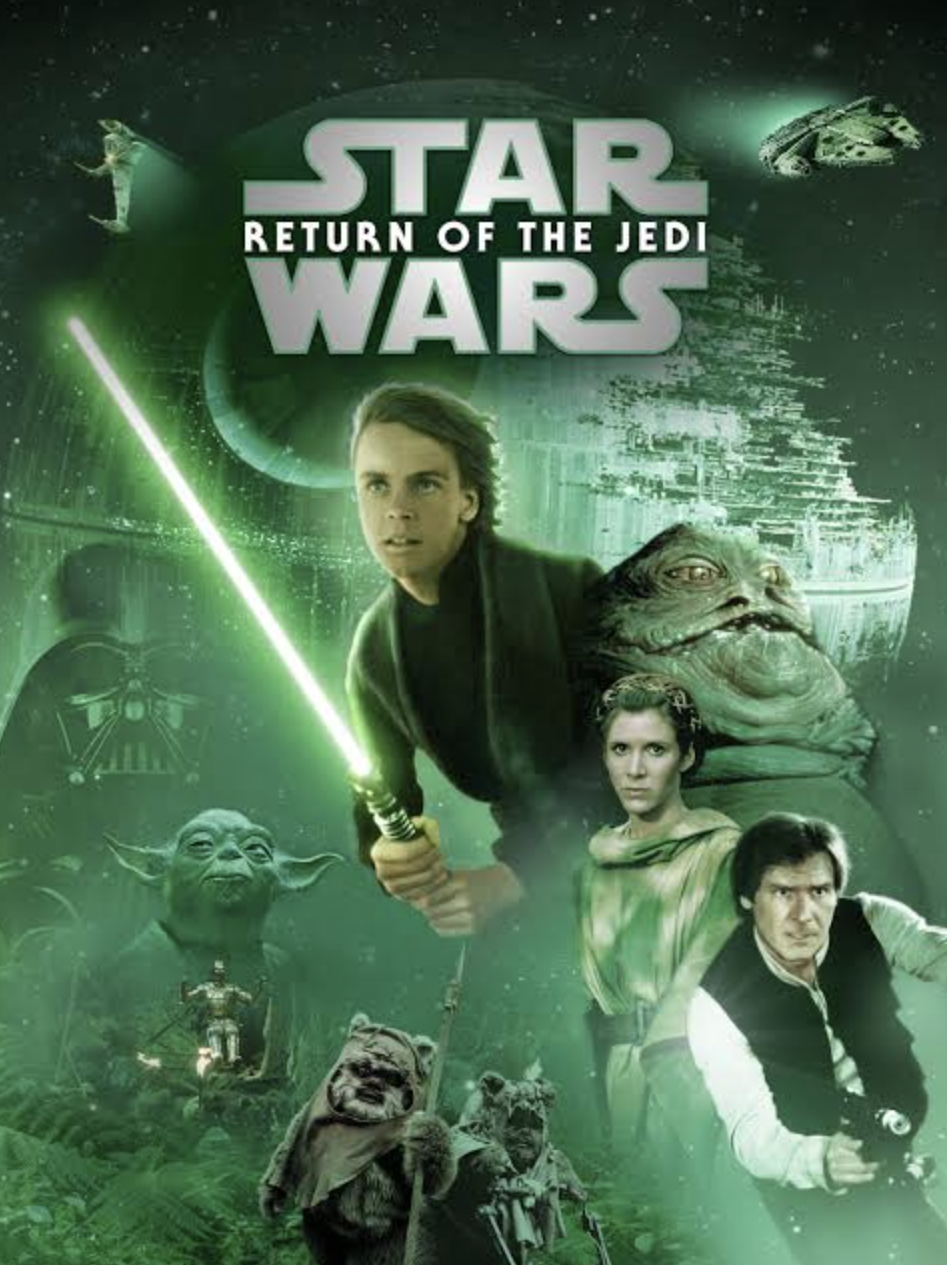
    Return of the Jedi cover

    Return of the Jedi: Star Wars OG #3

    Analyzer: Jubilee Anderson

    This post includes spoilers!

    A long time ago, in a galaxy far, far away….

    The Imperial forces have begun constructing a new, bigger, and more powerful Death Star than the one Luke destroyed in A New Hope. After rescuing Han Solo from imprisonment, Luke flies back to the Jedi Master Yoda to complete his training. Yoda tells him that the only way for him to become a Jedi is to face his father and kill him. After the death of his beloved master, Luke joins his friends in their mission to destroy the new Death Star. But not far into the journey, he realizes his presence is severely jeopardizing his friends’ safety.

    Return of the Jedi includes themes of good vs. evil, manhood, and loyalty. Luke not only faces hatred and overcomes it, but he brings someone else with him back to the Light Side.

    My Thoughts

    If the last movie did a good job of stirring up Luke’s internal conflict between hatred and love and giving in to his father’s request, this movie is even better. I have so many favorite scenes from this movie. The interaction between C3PO and the ewoks was so funny! It was really sweet when Luke reveals the truth to Leia about their identity, and I love the tension in the final scenes between Luke, Darth Vader, and Palpatine. This is the most touching of all the movies by far, and a neat wrap-up to the original Star Wars trilogy.

    Content Labels: Mild violence, romantic tension including several instances of kissing. The beginning scenes show women scantily clad, with only a bikini on. This is the major reason I’d give Return of the Jedi a 3 star instead of 4, and while it was effective to the plot, it was also very distracting.

    For Ye Writers!

    Character Arcs

    To recap, Luke’s Goal is to be a Jedi, and his Want is to be like his father. In the last movie, Luke overcame his pride and realized that he, too, could be subject to the Dark Side. 

    He also learned that his father was not actually the good man he had envisioned. But Luke still has this vision of what a good man looks like based upon who he thought his father was before he learned the truth. So let’s follow the major plot points through Luke’s character arc as he fully solidifies what it truly means to be a hero, and ultimately, a man.

    In Return of the Jedi, the call to action happens when Yoda tells Luke that he must kill his father to become a Jedi. Luke doesn’t accept this call to action right away. He doesn’t want to kill his father.

    With hope and yearning for his father to change to the Light Side, Luke eventually surrenders himself to the stormtroopers in order to try to convince Darth Vader to turn back. But Vader refuses, delivering Luke to Emperor Palpatine.

    Palpatine places Luke by a window to watch the destruction of the Rebel forces and the deaths of his friends. This is Luke’s final chance to resist hatred, but Palpatine lures him in. Luke battles Darth, but then realizes that he’s falling to the Dark Side just like his father did. He throws down his lightsaber. Enraged, Palpatine electrocutes Luke, but Darth Vader steps in front, sacrificing his life for Luke and becoming the man Luke originally imagined his father to be. 

    While Luke is certainly changed, there is a larger contrast between Darth Vader at the beginning and Darthat the end of the movie. Darth Vader at the beginning is a tyrant, but also somewhat a slave, willingly obeying Palpatine’s command. At the end, he dies for his son, overcoming his hatred in love and defeating Palpatine.

    As I mentioned in the analyzation of The Empire Strikes Back, there are three types of characters necessary to a positive change arc: the protagonist, a character stuck in the evil the protagonist wants to avoid, and a character already living the virtue the protagonist wants to achieve.

    Last time we discussed several options for the vice in this movie and we decided upon either hatred or pride (RotJ seems to lean heavier on the hatred aspect whereas the TESB seemed to lean more towards the pride aspect). 

    At this point, Luke has already overcome his pride, and now he must face the temptation to hatred and overcome it. Again, he must choose; will he follow the path of Obi Wan and Yoda? Or will he fall to the Dark Side and join Palpatine and Darth Vader? 

    Luke not only overcomes this temptation, he brings his father along with him to the Light Side.

    Plot Structure

    Take a look at the more in-depth analyzation of The Empire Strikes Back here on K.M. Weiland’s website.

    Characteristic Mom: Luke is back in Tatooine. They set out to rescue Han and succeed.

    Inciting Event: On his deathbed, Yoda tells Luke that the only way to become a Jedi is to face his father.

    Push Point: Luke joins his friends in their mission to destroy the Death Star’s shield, but regrets it when he realizes Darth Vader can sense him with the force.

    Pinch Point: Han and Leia run into Storm Troopers on Endor. Emperor Palpatine sets a trap for the Rebel ships coming to blow up the new Death Star.

    Midpoint: The Ewoks lead the Rebels to the shield generator on Endor. Luke reveals to Leia that Darth Vader is his father. He surrenders to the Empire and they take him to Darth Vader.

    Pinch Point: Luke fails to convince Darth Vader to turn from the dark side. “You underestimate the power of the dark side.”

    Lowpoint: Leia and Han are trapped by the storm troopers. Luke watches the Rebel ships being destroyed. He gives in to the temptation and fights his father. Luke cuts off Vader’s hand just like Vader cut off Luke’s hand. If Luke goes any further, he will become Darth Vader himself.

    Climax: Luke resists the temptation to give in to his anger and ultimately the Dark Side. He almost dies, but Darth Vader kills the Emperor, sacrificing his life and saving Luke. When Luke defeats his temptation, he becomes a Jedi knight and figuratively he becomes a man.

    Resolution: Everyone celebrates. Luke cremates Vader’s remains. He later sees his force ghost father Anakin beside his mentors Obi Wan and Yoda.

    Closing

    I hope this review/analyzation of Return of the Jedi has helped you see how plot, characters, and theme are tightly interwoven, and hopefully you can impliment some of these things in your own story. You can find the analyzations for movies 1 & 2 here and here.

  • Analyzing: The Empire Strikes Back

    Analyzing: The Empire Strikes Back

    The Empire Strikes Back cover

    The Empire Strikes Back: Star Wars OG #2

    Analyzer: Jubilee Anderson

    Remember, this post includes spoilers!

    A long time ago, in a galaxy far, far away….

    When his old mentor’s ghost tells Luke to go to another planet to train under a Jedi Master named Yoda, Luke immediately obeys. At the same time, the Rebel base is attacked, and Luke’s friends are forced to flee. Will Luke finish his training in time to face the evil lord, Darth Vader, or will his friends be killed by Vader’s forces?

    The Empire Strikes Back has themes of good vs. evil, loyalty, and romance.

    My Thoughts

    In the last post we talked about movie 1, A New Hope. Now I’m back to talk about the second movie.

    I heard a lot of spoilers before watching this movie, sadly, including one of the best plot twists in movie history. When I finally watched it, it was exactly how I expected. I was so shocked at meeting Yoda, I wondered if Luke had really found the right guy! I was really sad for Han and Leia, and I loved Luke’s character arc especially during the last half of the movie.

    I know I said this last time, but it’s true: George Lucas is a master storyteller!

    Content Labels: Romantic tension between characters, including multiple instances of kissing. 

    Takeaways: The ending of this movie was suspenseful, with some loose ends not tied until the third movie. I really, really loved Luke and Vader’s character arcs and relationship as protagonist and villain. I loved the theme of fighting for what’s right and watching how Luke overcame his lies and fears to embrace this truth.

    For Ye Writers!

    Character Arcs

    (Remember: this is a study of how Luke changes over the course of the movie. Also, lots of spoilers here! DON’T READ THIS IF YOU HAVEN’T WATCHED IT!!!)

    To recap from the last movie, Luke wants to “be a Jedi like my father”, by which he means that he wants to be like his father. So Luke has a Goal: to become a Jedi; and a Want: to become the honorable man his father was, willing to sacrifice for good. Now he just needs to get there. 

    In this movie, Luke accepts the call to action to become a Jedi when Obi Wan tells him to train under Yoda. When Luke first meets Yoda, he treats him with disrespect and impatience. He thinks he has it all figured out. But overtime, he learns to respect Yoda. 

    One day, Yoda sends him to fight Darth Vader, and Luke cuts off Vader’s head. He realizes it was all just a vision, and he looks into Vader’s mask. Inside is a reflection of a face that looks like his. Luke realizes that he could turn to the dark side if he does not guard himself from temptation. 

    He is faced with himself again at the climax, but this time in a different way. After cutting off Luke’s hand, Darth Vader reveals that he is Luke’s father. Vader tempts Luke to join the dark side, but Luke has learned his lesson. He doesn’t give in, but instead throws himself into the pit.

    At the beginning of the movie, Luke thought he knew how to be a Jedi and how to resist evil temptation. He was ignorant and stubborn. But in the end, he truly resists temptation and overcomes it. He actually knows this time and he’s willing to learn instead of ignorantly going on his way.

    In a story there are three main characters necessary to the plot of a positive change arc: The protagonist is the changing character. In The Empire Strikes Back, this character is Luke. Darth Vader (villain) is the one stuck in the evil Luke is trying to avoid, and Obi Wan Kenobi (mentor) is a perfect example of an impact character, or one actively living the virtue Luke is trying to achieve. 

    You may be asking, what evil is Luke trying to avoid? It was difficult to pinpoint an exact vice, but I came down to two. 

    The first one was pride. There are several hints that this is the vice throughout the movie. At the beginning, Luke thinks he has it all figured out and can resist evil on his own. Long before that, in the first movie, Darth Vader force chokes a man for telling him there is something wrong with his ship. These are instances of pride, but there isn’t a clear indication of humility from either Obi Wan or Luke, although there are traces of it.

    The second vice I thought of was hatred. Using the same instance of Darth Vader force choking the man in A New Hope, that certainly seems like an instance of hatred. There are other hints, like the way in which Darth became the dark lord, or in the third movie, when the Emperor tells Luke to give into his anger.

    Over the course of the story, Luke must choose who he will follow; Vader, or Obi Wan? Pride or Humility? Hatred or Love?

    Plot Structure

    Like in the last post, this section describes the plot of The Empire Strikes Back according to the 3-Act Structure. You can look at the more in-depth plot of this movie here on K.M Weiland’s website.

    Characteristic Moment: Luke is scouting out terrain. Han and Leia are in the Rebel base.

    Inciting Event: Luke is attacked by a wild animal. Once he escapes, Obi Wan’s ghost tells Luke to train under a Jedi named Yoda.

    Push Point: The Empire attacks the rebel base, forcing them to flee. Luke goes to Yoda’s planet while Han and Leia fly off in the Falcon

    Pinch Point: Emperor Palpatine tells Darth Vader that Luke, son of Anakin, is the new enemy they must hunt down.

    Midpoint: When Luke sees the vision of Darth Vader but then he touches it and sees himself.

    Pinch Point: Luke sees Han and Leia being tortured in a vision and he goes to save them against his mentor’s warnings. Vader forces Lando to betray Han and Leia.

    Lowpoint: Han is frozen in carbonite. Luke finds out that his father, the man he looked up to and wanted to be like, is Darth Vader.

    Climax:  Luke chooses not to accept his father’s offer to join the Dark Side and ends up hanging at the bottom of a building.

    Resolution: Luke is rescued by Leia and they fly away to safety.

    Closing

    I hope this review/analyzation of The Empire Strikes Back has helped you see how plot, characters, and theme are tightly interwoven, and hopefully you can impliment some of these things in your own story. You can find the analyzations for movies 1 & 3 here and here.

    When you watched The Empire Strikes Back, what did you think of the plot twist? I’d love to hear about it. Share with me here!

  • Analyzing: A New Hope

    Analyzing: A New Hope

    A New Hope cover

    A New Hope: Star Wars OG #1

    Analyzer: Jubilee Anderson

    A long time ago, in a galaxy far, far away….

    Luke has always wanted to do something more meaningful and adventurous than living his boring life in the desert planet of Tatooine. When Luke and his uncle bring home two droids, Luke tries to fix them up. But a secret message he discovers inside one droid will change the course of his future.

    A New Hope, Star Wars movie 4 (or #1 in the OG 3) has threads of good vs. evil, coming-of-age, and adventure.

    Why A Star Wars Series?

    I got my first taste of Star Wars at my cousin’s birthday party years ago. Since then, I’ve watched various movies in the series many times with my siblings.

    The last time we watched the Original 3 (OG 3), I decided to write a collection of movie reviews. But in addition, I also wanted to analyze the plot structure of the films so that writers who have watched them can understand the three-act structure and use it in their own novels. So buckle up, and let’s take a ride through outer space! BEWARE: SPOILERS AHEAD!

    My Thoughts

    I love it. It’s action packed with chase scenes, laser shooting, space ships, and cool interstellar planets. Everything you can expect from a thriller sci-fi movie.

    George Lucas is a master storyteller. Every time I watch this, I’m drawn in by the first movie. The second and third movies have awesome plot twists, but A New Hope really holds itself up. 

    My favorite scenes are the beginning scene when Luke finds the secret message, and the scene at the end when Luke and Han get their metals.

    Content Labels: Light romantic tension between characters, including flirting and a kiss on the cheek. 

    Takeaways: The ending of the movie left me smiling. As I said before, A New Hope could be a stand-alone. It holds itself up very well, and provides a good foundation for the next two movies and their awesome plot twists.

    For Ye Writers!

    Now let’s move on to the next section. This is the part for you writers out there. While I wrote all of this content on my own, I didn’t learn about story structure by myself! The links in the next section come from K.M. Weiland’s blog, Helping Writers Become Authors. She has an awesome platform, and I highly recommend checking it out!

    I’m just gonna warn you, this next part contains full spoilers of the entire movie. Trust me, this is not a movie series you want spoilers on!

    Character Arcs

    (This section describes how Luke changes internally throughout the movie)

    Luke has lived in his Normal World, Tatooine, his entire life. He’s tired of the normal and yearns for adventure.

    When Obi Wan tells Luke that his father, Anakin, was a Jedi, Luke says he wants to be a Jedi, too. But to be more specific, Luke didn’t just want to be a Jedi. He wanted to “be a Jedi like my father.” He wanted to be like his father. That hero, that honorable man.

    At the end of the story, Luke has achieved his goal. He’s not a Jedi yet, but he’s done something honorable. He’s saved his people from the Death Star. His Want is fulfilled.

    Luke has more of a flat arc in the first movie, in that he doesn’t learn anything specific. His Want wasn’t changed in any way, but he’s changed the world around him, and now he lives in the New World instead of the Old.

    Plot Structure

    This section describes the plot of A New Hope according to the 3-Act Structure. Again, while I discovered the plotpoints for this movie myself, I wasn’t the first person to do so, and I didn’t teach myself. K.M. Weiland has the entire plot of A New Hope laid out here if you’d like to study this more in depth.

    Characteristic Moment: Luke’s “normal world” is in Tatooine, living with his aunt and uncle. He wants to do something meaningful in life.

    Inciting Event: Luke finds Leia’s secret message in R2-D2 mentioning a man named “Obi Wan Kenobi.”

    Push Point: Luke’s aunt and uncle die, forcing him to go with Obi Wan.

    Pinch Point: The bad guys blow up Alderaan

    Midpoint: They’re sucked in by the Death Star’s gravitational pull. 

    Pinch Point: They end up in the trash compactor which the bad guys turn on

    Lowpoint: Darth Vader kills Obi Wan. Luke, Han, and Leia make it to the ship and fly away in grief.

    Climax: The Death Star is about to blow up the Rebel base. Luke flies a ship down the tunnel and shoots a laser beam into the mechanism that will destroy it. Death Star explodes.

    Resolution: Luke and Han get medals for their bravery. Luke has done what he always wanted to do: something meaningful. He’s a hero now.

    Closing

    I hope this review/analyzation of A New Hope has helped you see how plot, characters, and theme are tightly interwoven, and hopefully you can impliment some of these things in your own story. You can find the analyzations for movies 2 & 3 (or 5 & 6) here and here.

    Was this post helpful? What is one thing you’ve learned from a movie/book you’ve analyzed? I’d love to hear about it. Share with me here!

  • My Writing When I Was 10

    My Writing When I Was 10

    10-Year-Old-Me Writing Comparison: Anda and Philip

    Hello writers! I thought it would be fun to compare a story I wrote when I was 10 to the edited version. The version that sounds worse is 10-year-old me’s writing. Enjoy!

    * * * * *

    ORIGINAL

    The front of the yard was dotted with fruit trees, but the back was mostly an overgrown mass.  There was one hollow, odd-shaped sort of tree in front of the mass that was dead.  But the best part was being able to feel the wind-blown water splash on their faces from the river behind the fence.  The cousins wished they could swim in it.  The water looked so cool on hot summer days, but their mothers thought they weren’t old enough to go in such dangerous water.

    * * * * *

    Anda and Philip was the first novel that I completed…at 15K words. To give you context, the average Middle Grade novel contains about 30K words. I hope this encourages you that even if your book sounds really terrible right now, you will improve. You will get better if you keep practicing. See you next time!

  • Interview with Chloe Ann

    Interview with Chloe Ann

    Hey everyone! It’s been a while since I’ve posted! Today I’m excited to share a writer interview with Chloe Ann! Chloe shares some wonderful reasons as to why she writes and encourages fellow writers to think about their reasons for writing as well. Enjoy!

    ……………………………………………………………………………………………………………….

    Thank you so much for doing this, Chloe!  I can’t wait!

    Absolutely! I’m so excited for this interview!

    When did you start writing and what did you write?

    When did I start writing? I can’t remember. We’ve got pictures of me at seven or eight years old with a notebook and a pen posing for author pictures. I loved writing, loved creating story worlds, and still love doing both of those things. 

    My earliest story was about a princess (me) who helped rescue an orphan slave girl. It was all handwritten and I’m missing half the pages of the story, but I think she lived in some fantasy country that really resembled the Bahamas. She had a private litter (you know, the thing people carry you around on?), private bedrooms, a private pool. She was pretty cool.  

    For a few years, I was working on one story, entitled “Chosen One” with a girl protagonist who looked and acted a lot like me. It was a pretty fun story, but fell apart as I went farther in the writing process. Later, for school, I was assigned to write a short story. I didn’t think I could do it because I could only come up with dramatically long plots. But I did it and we got it published in a private anthology. After that, I dabbled in short stories and wrote a handful of them. I wrote a couple novellas and finally stumbled onto the project I’m working on now.

    How have your stories progressed over the years?

    Progression is painful. It means admitting you were wrong. And yes… myself at eight years old was writing my stories wrong. But progression is also about making things better. My stories have gotten better in their plots. They no longer have the stereotypical “hero saves the princess” kinda ring to them. My characters have become stronger. They’re not perfect cardboard cutouts, slapped into a world that I thought would be fun to live in. They’re the embodiment of ideas and beliefs, designed to show readers what is truth and what isn’t. 

    Why do you write? 

    Harriet Beecher Stowe was the daughter of the president of a theological college in Ohio in the 1800s. In 1851-52, she published her most famous work, Uncle Tom’s Cabin, in a cry of outrage against slavery. Her book caused such a massive tidal wave that Abraham Lincoln is recorded as having said upon meeting Mrs. Stowe, “So you’re the little woman who wrote the book that made this great war.”

    Words have power. Since I can remember, I’ve wanted to be Harriet Beecher Stowe. I’ve wanted to write against injustice in the world and write to tell others about the Truth that can set them free. Words have the power to change people’s lives. Writers, use that power for the glory of God. 

    If you could go back and give your younger self writing advice, what would it be?

    Firstly, don’t make your main character yourself. A good hero has failures, losses, and is usually pretty awful until the author makes them good. My eight year old self did not know that.

    My favorite writing quote is by Richard Bach (I have no clue who he is, but I like his quote): “A professional writer is an amateur who didn’t quit”. If I could tell myself one thing, it would be to not quit. All those years of awful stories eventually paid off.

    Do you have any encouragement/advice for young writers reading this post?

    If your identity is in your writing, then it’s in the wrong place. That might sound weird coming from a writer, but it’s true. You’re going to get bad reviews, going to get negative critiques, and going to struggle with writer’s block. You may think you’re over all that, but you’re not.

    Clinging to writing as your identity is building your house in sand. When waves and hard stuff come, your house is going to collapse. Put your identity in the One who is worth it. Writing’s not worth it. Once you figure that out, you’re well on your way to becoming a good author.

    Have you published anything?  Where did the inspiration for this project come from?

    The project I’m currently working on is a fantasy series about a young man who is separated from his past life. Saved by friends he once called enemies, he now is fighting enemies he once called friends. Forged by Fire combines the themes of “The Chronicles of Narnia” with the allegorical elements of Pilgrim’s Progress and the sacrifices of Les Miserables. It’s the first book in my series, “Condemned” and will hopefully be soon followed by the second book, whose working title is Child of the Darkness

    The inspiration for Forged by Fire carried over from those old stories I wrote years ago. I always wanted to write an allegory and hide truths in a tale that would hopefully touch a reader and make them evaluate their own life. My editor will be getting Forged by Fire in October and it will probably be a year before the book is released. 

    What is the best place for a reader to find you if they were interested in you and your stories?

    If you’re on the Young Writer’s Workshop, then follow me there. I would love to chat about anything and everything at any time!

    I’m working on building my blog, centered around reading literature that goes against the cultural trend. Since the website is still being built, I can’t release the name just yet. But it should be up and running within the next few months. 

    ……………………………………………………………………………………………………………….

    I’m so glad I got to do this interview! For those on my email list, you can look forward to more information about Chloe’s website and blog at a later date. Have a blessed day!

    UPDATE: Chloe has a blog. If you are wondering where to find your next book to read, I cannot recommend her website enough! Check it out here!

    If you enjoyed this post and would like to receive updates on new content, subscribe to my email list here!