
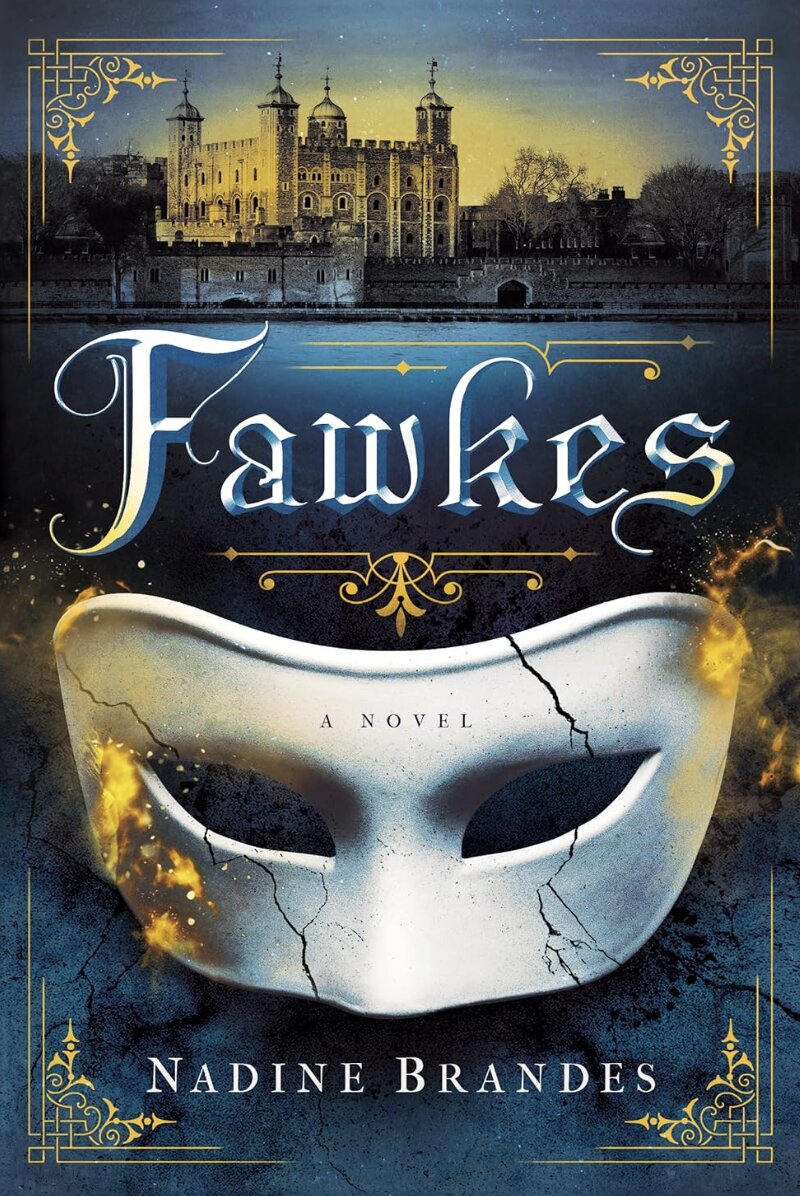
Fawkes
By Nadine Brandes
Remember, remember, the 5th of November,
The Gunpowder treason and plot;
I know of no reason why the Gunpowder treason
Should ever be forgot!
Guy Fawkes, Guy Fawkes, ‘twas his intent
To blow up the King and Parliament
Three score barrels of powder below,
Poor old England to overthrow.
By God’s providence he was catch’d,
With a dark lantern and burning match.
Silent wars leave the most carnage. The wars that are never declared but are carried out in dark alleys with masks and hidden knives. Wars where color power alters the natural rhythm of 17th-century London. And when the king calls for peace, no one listens until he finally calls for death.
But what if death finds him first?
Keepers think the Igniters caused the plague. Igniters think the Keepers did it. But all Thomas knows is that the Stone Plague infecting his eye is spreading. And if he doesn’t do something soon, he’ll be a lifeless statue. So when his Keeper father, Guy Fawkes, invites him to join the Gunpowder Plot—claiming it will put an end to the plague—Thomas is in.
The plan: use 36 barrels of gunpowder to blow up the Igniter King.
One thing is clear: Once the decision is made and the color masks have been put on, there’s no turning back.
Review
People had told me Fawkes was a good book, but I didn’t really know how good until I opened the first page and saw the poem about Guy Fawkes. I was thrilled. I love it when authors take a small history tidbit that no one talks about but people vaguely remember and turns it into a novel!
Fawkes has complex, strong characters. When the main character, Thomas, must choose, he chooses what’s right even though it might cost the death of someone he loves. It is a subtle way to show strength in Thomas. Thomas’s father is torn between love for his son and pride in the Gunpowder Plot he is apart of. This provided a relatable and powerful ending!
I really enjoyed the symbolism with the White Light. Brandes had me wavering as to whether the Keepers or the Igniters were correct; whether use of the White Light was bad or good. I also loved that this symbolism was twofold, almost an allegory for 17th-century England’s Church!
The ending touched me. Even though it was bittersweet, I was glad. Again, I can’t say much for spoilers, but it is worth the read!
I’ll see you in the next chapter!